2 hour on-dmenad CLE available here: https://federalbarcle.org/product/pleading-strategies-in-employment-litigation-from-initial-filing-to-tactical-defense/
Program Summary
Session I – From Facts to Frame: Building the Employment Complaint – Reuben A. Guttman
Whether you’re representing individuals or classes in employment disputes, your first filing sets the tone for the entire case. In this dynamic session, renowned trial attorney and legal educator Reuben Guttman will walk attendees through the art and strategy of constructing persuasive complaints that do more than just state a claim—they tell a story. From conducting meaningful pre-filing investigations to weaving together facts, evidence, and legal theory into a powerful narrative, this session empowers attorneys to frame employment disputes with an eye toward trial, settlement leverage, and long-term case positioning.
Key topics to be discussed:
- Building a case backwards: Starting with the jury in mind
- From investigation to allegation: Turning workplace facts into legal claims
- Narrative advocacy: Crafting a story that sticks
- Embedding evidentiary foundations into the complaint
- Leveraging Rule 8 to your advantage
SessioSession II – Defending the Case: Responsive Pleadings & Preemptive Strategy – Justin K. Victor
For defense attorneys, the early stages of litigation offer a vital opportunity to shape the path of a case or end it entirely. In this session, experienced litigator and Emory Law trial practice instructor Justin Victor explores how thoughtful, well-crafted responsive pleadings can neutralize a plaintiff’s momentum and assert control over the narrative. Attendees will learn how to deploy Rule 12 motions effectively, assess and challenge weak claims, and begin laying the groundwork for defense themes that will resonate with juries and judges alike. This session is essential for defense-side lawyers seeking to win early or shape the field ahead.
Key topics to be discussed:
- Strategic use of Rule 12 motions
- Spotting the cracks: Deconstructing plaintiff narratives
- Crafting a proactive defense narrative
- Preserving issues for summary judgment and appeal
- Protecting corporate clients from discovery overload
Date / Time: May 30, 2025
- 1:00 pm – 3:10 pm Eastern
- 12:00 pm – 2:10 pm Central
- 11:00 am – 1:10 pm Mountain
- 10:00 am – 12:10 pm Pacific
Agenda
Session I – From Facts to Frame: Building the Employment Complaint | 1:00pm – 2:00pm
- Building a case backwards: Starting with the jury in mind
- From investigation to allegation: Turning workplace facts into legal claims
- Narrative advocacy: Crafting a story that sticks
- Embedding evidentiary foundations into the complaint
- Leveraging Rule 8 to your advantage
Break | 2:00pm – 2:10pm
Session II – Defending the Case: Responsive Pleadings & Preemptive Strategy | 2:10pm – 3:10pm
- Strategic use of Rule 12 motions
- Spotting the cracks: Deconstructing plaintiff narratives
- Crafting a proactive defense narrative
- Preserving issues for summary judgment and appeal
- Protecting corporate clients from discovery overload
Speakers
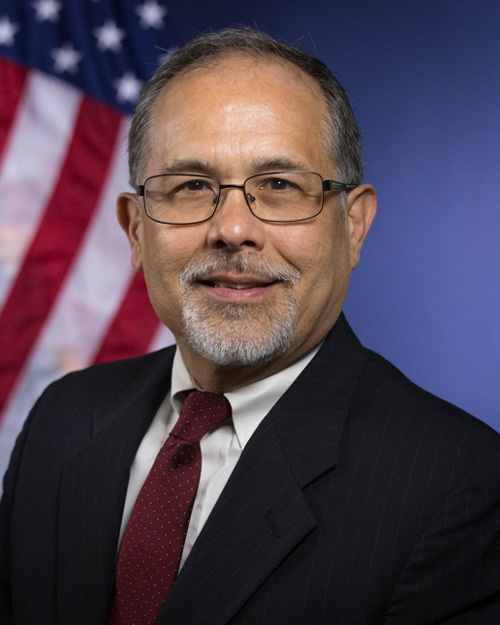
Reuben A. Guttman | Guttman, Buschner, PLLC
Reuben Guttman is a founding member of Guttman, Buschner, PLLC where his practice involves civil rights, whistleblowers, class actions and complex litigation.
The International Business Times has referred to him as “one of the world’s most prominent whistleblower attorneys.” Citing “wins recouping billions of dollars for the federal and state governments,” Boston Globe’s STAT News referred to him as the “The Lawyer Pharma Loves to Hate.” Guttman has represented workers, unions, and pension funds in complex litigation. For over a decade, he has served as the chief outside counsel to the Oil, Chemical & Atomic Workers International Union, AFL-CIO/CLC, in a series of labor and environmental cases that enhanced safety and environmental conditions at Manhattan Project nuclear weapons sites while driving dread disease compensation legislation for nuclear weapons workers across the nation.
In 2020, he served as lead counsel in a federal class action lawsuit against the South Carolina Department of Corrections and secured a consent order mandating Hepatitis C testing and treatment for 17,000 inmates.
Guttman is currently a faculty member of the American University School of Public Affairs where he teaches Equal Protection/Civil Rights, and he has been an Adjunct Professor at Emory Law School and a Senior Fellow at Emory Law’s Center for Advocacy and Dispute Resolution. He is a Founder and Senior Advisor to the Emory Corporate Governance and Accountability Review (ECGAR). He is the 2015 recipient of the Emory Law Alumni Service Award.
He has taught trial advocacy and complex case investigations in the United States, China, and Mexico, and he has co-authored three case files – two published by Emory Law and one published by the National Institute of Trial Advocacy where he is a faculty member.
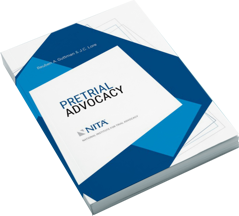
He is co-author (with J.C. Lore III of Rutgers Law) of the textbook, Pretrial Advocacy (Wolters Kluwer Spring, 2021). He is a chapter co-author (with Traci Buschner) and wrote the introduction for Remote Advocacy: A Guide to Survive and Thrive (Wolters Kluwer and National Institute of Trial Advocacy, 2020).
Guttman has written or co-authored more than 100 articles or opinion pieces and multiple book chapters and law review pieces. He is a monthly columnist for Law360 where he writes on litigation and politics.
His article, Pharmaceutical Regulation in the United States; a Confluence of Influences, was translated and published in Mandarin in the Peking University Public Interest Law Journal, Vol 1, Page 187 (2010).
Guttman is a Fellow of the American Bar Foundation; he is past member of the Board of Directors of the American Constitution Society (ACS) where he is currently a member of the ACS Board of Advisors.
Guttman received his JD from Emory University and his BA in American History from the University of Rochester. He is the founder of www.whistleblowerlaws.com. He began his legal career as a Washington DC counsel for the Service Employees International Union, AFL-CIO, where he served for five years. Guttman is licensed to practice in front of The United States Supreme Court and in the states of Georgia, New Jersey, Pennsylvania, the District of Columbia.
Justin K. Victor | Greenberg Traurig LLP
Justin K. Victor is a seasoned first-chair trial lawyer focusing on trade secrets litigation, corporate governance disputes, and other highstakes commercial litigation and arbitration. Known for his experience and trusted counsel, Mr. Victor is frequently sought after by representing clients in critical, “bet-the-company” cases.
With the ability to navigate complex legal challenges, Mr. Victor has obtained temporary restraining orders, preliminary injunctions, and permanent injunctions in both state and federal courts to protect clients against trade secret misappropriation and enforce restrictive covenants.
Beyond his active litigation practice, Mr. Victor provides strategic counsel to employers expanding their international operations. He leads efforts to design and implement employment policies, conduct proactive audits, and deliver workplace training tailored to the unique needs of global businesses.
Mr. Victor has a proven track record in assisting sports agencies—both domestically and international— expand their operations worldwide. For example, he played a key role in launching and growing the U.S. headquarters of a UK-based sports travel agency. Additionally, he has guided U.S.-based sports agencies in establishing operations across Europe, Mexico, and the Middle East, demonstrating his ability to navigate and quarterback the complexities of international business expansion.
To register, to learn about CLE and more visit https://federalbarcle.org/product/pleading-strategies-in-employment-litigation-from-initial-filing-to-tactical-defense/