• Skip to primary navigation
  • Skip to main content
  • Skip to primary sidebar
  • Skip to footer

Guttman Buschner LLP

  • Home
  • Areas of Practice
    • High Impact Litigation
    • Whistleblower and False Claim Cases
    • Personal Injury & Wrongful Death
    • Employment Litigation and Civil Rights – Employees
    • Employment Counseling and Litigation – Employers
    • Dispute Resolution and Investigation
    • Corporate Governance
  • Successes
  • Articles
  • Attorneys & Advisors
    • Reuben A. Guttman
    • Traci L. Buschner
    • Judge Nancy Gertner (Ret.)
    • Dan Guttman
    • Elizabeth H. Shofner
    • Dr. Lisa Wollman, MD
    • Rick Mountcastle
  • CLE Seminars
  • Amicus
  • Videos
  • Contact Us
    • Twitter
    • Facebook
    • LinkedIn

Staff

July 15, 2026 By Staff

Winning at Mediation: Reading Both Sides, Using the Mediator, and Closing Hard Cases

Program Summary

Litigators are trained to persuade a judge or jury that the facts compel a particular result, a discipline that can proceed without ever asking why the other side refused to settle. Mediation rewards the opposite instincts. It demands diplomacy, listening, and the capacity to read both your client’s concerns and opposing counsels, then locate the opening that closes a case the parties believed unresolvable. As court-ordered mediation becomes a routine condition of moving a case forward and clients press harder on cost and finality, attorneys who carry trial reflexes into the mediation room forfeit leverage and stall resolutions that were within reach. This one-hour program, led by former federal judge Mary Ellen Williams and Washington, D.C. trial lawyer Reuben Guttman of Resolute Systems, shows counsel how to change gears, deploy the advocacy skills that resolve seemingly impossible disputes, use the mediator deliberately, and prepare clients for both voluntary and court-ordered proceedings. Attendees leave able to advocate for settlement rather than against it.

Live Video-Broadcast: August 27, 2026

1 – 2:00 PM EST    12 – 1:00 PM CST    11 AM – 12:00 PM MST    10 – 11:00 AM PST  

What Will You Learn

Attorneys will learn how to change gears for mediation, identify the advocacy skills needed to resolve seemingly unresolvable disputes, and find openings that lead to resolution.

What Will You Gain

They will gain the ability to best use the mediator, prepare a client for mediation, and understand the difference between voluntary and court-ordered mediation.

Key topics to be discussed:

  • Litigation defined
    Litigation persuades a judge or jury by matching facts to law.
  • Mediation defined
    Mediation is problem solving, an exercise in diplomacy.
  • Core skills
    Mediation involves listening, creativity, and reading the concerns of both parties.
  • Flexible resolution
    Resolution may not flow from precise application of law or facts.
  • Imperfect outcome
    Mediation resolves the impossible with a result neither side finds perfect.
  • Dispute resolution
    Resolute Systems provides nationwide dispute resolution services.

Date / Time: August 27, 2026

  • 1:00 pm – 2:00 pm Eastern
  • 12:00 pm – 1:00 pm Central
  • 11:00 am – 12:00 pm Mountain
  • 10:00 am – 11:00 am Pacific

Closed-captioning available.

Agenda

SESSION 1 – Changing Gears from Trial Advocacy to Mediation | 1:00pm – 1:15pm

This session examines how attorneys shift from courtroom persuasion to collaborative problem solving, explaining why mediation rewards diplomacy and listening over rigid application of facts and law, and how counsel recalibrates once settlement, not victory, becomes the objective.

SESSION 2 – Advocacy Skills for the Unresolvable Dispute | 1:15pm – 1:30pm

This session identifies the advocacy skills required to resolve disputes that appear hopeless, showing how counsel reads the concerns of both clients and opposing parties to locate openings that move far-apart positions toward a workable resolution.

SESSION 3 – Working with the Mediator | 1:30pm – 1:45pm

This session explains how counsel can best use the mediator as a strategic resource, framing positions, communicating through a neutral party, and leveraging the mediator’s role to break impasse and move the parties toward a workable resolution.

SESSION 4 – Preparing the Client and the Process | 1:45pm – 2:00pm

This session addresses how attorneys prepare clients for the mediation setting and distinguishes voluntary mediation from court-ordered proceedings, clarifying how posture and expectations differ and how counsel adjusts preparation and strategy for each.

Click Here to register or for more information: https://federalbarcle.org/product/winning-at-mediation-reading-both-sides-using-the-mediator-and-closing-hard-cases/

Speakers

Mary Ellen Coster Williams, Mediator and arbitrator | Resolute Systems, LLC

Mary Ellen Coster Williams is a full-time mediator and arbitrator with Resolute Systems, drawing on two decades on the federal bench. She left the United States Court of Federal Claims in July 2023 after a distinguished judicial career to devote herself to alternative dispute resolution. At the court, she handled many mediations in complex civil cases for her colleagues and earned a reputation as a go-to mediator, known for resolving disputes that appear intractable.

  • Education & Credentials

Mary Ellen Williams received her J.D. from Duke University School of Law, where she served on the Editorial Board of the Duke Law Journal. She earned a combined degree from Catholic University, graduating summa cum laude with a Bachelor’s degree in Greek and Latin and a Master’s degree in Latin. She was elected to Phi Beta Kappa and received the President’s Award to the Outstanding Undergraduate Woman, the university’s highest honor for leadership and scholarship.

  • Recognition & Leadership

Mary Ellen Williams has been recognized repeatedly for her service. The United States Court of Federal Claims honored her with an Award for Outstanding Service to the Court and the Champion of Justice Award in 2018. Duke Law School presented its Charles S. Murphy Award for Achievement in Public Service in 2017. She was elected a Life Fellow of the American Bar Foundation in 1985, served on the ABA Board of Governors, and chaired the ABA’s Section of Public Contract Law.

  • Professional Involvement

Mary Ellen Williams remains deeply engaged in professional organizations. She serves in the ABA House of Delegates, on the Council of the Section of Public Contract Law, and on the Content Advisory Board for the Intellectual Property Law Section’s publications. She has served the Bar Association of the District of Columbia as Foundation president, Trustee, and board member. As an educator, she has taught at Catholic University and Johns Hopkins University and lectured extensively on civil trial practice, mediation, and discovery.

  • Experience

Appointed to the United States Court of Federal Claims in July 2003, Mary Ellen Williams presided over high-dollar matters involving government contracts, intellectual property, bid protests, Fifth Amendment takings, tax, and class actions, and handled extensive bench trials and discovery disputes. She previously served 14 years as an administrative judge on the General Services Administration Board of Contract Appeals. Earlier, she was a partner at Janis, Schuelke and Wechsler and an Assistant United States Attorney in the Department of Justice.

Reuben A. Guttman, Mediator and arbitrator | Resolute Systems, LLC

Reuben A. Guttman is a founding member of Guttman Buschner LLP in Washington, D.C. His practice centers on complex litigation, class actions, fraud, antitrust, and False Claims Act cases. Over his career, he has litigated and tried cases resulting in significant whistleblower recoveries. He is widely recognized as one of the country’s foremost False Claims Act and whistleblower attorneys. In addition to his practice, Mr. Guttman teaches trial advocacy and contributes scholarship on legal and public policy issues.

  • Education & Credentials

Reuben A. Guttman earned his Juris Doctor from Emory University School of Law in 1985 and received a Bachelor of Arts in American History from the University of Rochester in 1981. In addition to practicing law, he serves in academic roles including as a Senior Fellow and Adjunct Professor at the Emory University School of Law Center for Advocacy and Dispute Resolution, where he teaches and participates in trial advocacy training programs.

  • Recognition & Leadership

Mr. Guttman has been recognized within the legal profession for his work in whistleblower and complex litigation matters. Media coverage and legal publications have described him as a leading attorney in whistleblower litigation, and he has been named a “Top Lawyer” by Washingtonian Magazine. He has also served in leadership roles in legal and policy organizations, including election to the Board of Directors of the American Constitution Society for Law and Policy, and has participated in national and international programs focused on advocacy and legal training.

  • Professional Involvement

Beyond his litigation practice, Mr. Guttman is actively engaged in legal education and scholarship. He has lectured domestically and internationally, including at universities in China and through U.S. State Department programs training judges and practitioners in trial advocacy. He has also contributed commentary and articles on law, governance, and public policy.

  • Experience

Mr. Guttman’s practice spans complex commercial disputes, class actions, and whistleblower cases involving government fraud and regulatory violations. He has served as lead counsel in major False Claims Act matters, securing significant recoveries in pharmaceutical and financial fraud settlements. His work has addressed unlawful drug marketing, fraudulent mortgage assignments, and government contracting misconduct. He has also litigated employment and labor matters, including federal labor standards, workplace safety, and cases affecting workers in the U.S. nuclear weapons complex.

July 15, 2026 By Staff

On-Demand CLE: Why Mediation Fails and How to Fix It: A Strategic, Political, and Practical Approach to Case Resolution

Mediation is one of the most powerful tools in a litigator’s arsenal — but only when approached with strategic intent. This course goes beyond the mechanics of the mediation process to examine the political, psychological, and practical forces that determine whether a case resolves or falls apart. Drawing on decades of complex litigation experience, Reuben Guttman walks practitioners through how to diagnose why parties come to the table, how to select and prepare the right mediator, how to identify and overcome roadblocks, and how to reframe settlement in terms that resonate with clients and opposing parties alike. Attendees will leave with a sharper understanding of the hidden dynamics that drive — or derail — case resolution, and concrete strategies for making mediation work.

Click here for more information or to purchase this On Demand CLE, Why Mediation Fails and How to Fix It: A Strategic, Political, and Practical Approach to Case Resolution (On-Demand) – LPCLE –.

Principles

  • Successful Mediation Begins Long Before the Session
  • Settlement Is Driven by People, Politics, and Interests—Not Just Legal Merits
  • Effective Negotiation Requires Adaptability and Strategic Communication
  • Professionalism Creates Better Outcomes

Syllabus

  1. Why Parties Mediate — Identifying the real reasons parties seek mediation, from communication breakdowns and merit disputes to settlement validation and opposition research
  2. Mediator Selection — Key criteria for choosing an effective mediator, including credibility with opposing counsel, persistence, subject matter familiarity, and the ability to navigate roadblocks
  3. Understanding Case Baggage — How case type affects settlement dynamics, from highly polarizing claims (fraud, discrimination, family law) to cases more naturally suited to resolution (negligence, breach of contract)
  4. Insured vs. Uninsured Defendants — How insurance coverage shapes the emotional and economic dynamics of negotiation on the defense side
  5. Recognizing and Overcoming Roadblocks — Common barriers to settlement, including plaintiffs reluctant to part with their case, unrealistic damages models, parties overconfident in their own positions, attorney-client control issues, and adversarial lawyer dynamics
  6. The Politics of Bargaining — Mapping where negotiation actually happens: within each side, between counsel, and between attorney and client; why mediators must understand these internal politics
  7. Reframing Settlement for the Client — How to translate dollar figures into concrete, meaningful terms that connect with a client’s real-world goals and priorities
  8. The Corporate Rubik’s Cube — Analyzing how settlement or verdict affects a corporate defendant’s external exposure (further litigation, securities risk, regulatory scrutiny, reputational harm) and internal dynamics (profit center allocation, accountability)
  9. Reverse Engineering the Settlement — Working backward from a realistic resolution: who controls the decision, how settlement impacts the business, and how even contentious disputes get reduced to a business calculation
  10. Choosing the Right Forum — Comparing in-person, remote, and shuttle diplomacy formats, and evaluating which approach best fits the case and the parties
  11. Preparing and Educating the Mediator — Strategies for getting the mediator up to speed efficiently, including deselecting extraneous facts, focusing on dispositive issues, and using timelines and witness cheat sheets
  12. Learning Through Mediation — Using the mediation session itself as an intelligence-gathering opportunity to pressure-test facts, legal theories, and unanticipated defenses
  13. Zealous vs. Offensive Advocacy — Drawing the line between effective fact-based advocacy and conduct that poisons the process; how to inoculate the room against information that is difficult to receive
  14. Professionalism and Maintaining Relationships — Why the relationship with opposing counsel outlasts any single case, and why professionalism is the foundation of effective dispute resolution

Reuben Guttman, Esq.

Reuben Guttman, Esq. is a founding member of Guttman Buschner LLP and mediator with Resolute Systems who brings decades of complex litigation experience across fraud, breach of fiduciary duty, antitrust, environmental, and statutory claims. He has recovered billions of dollars for whistleblowers and the federal government, with qui tam settlements ranking among the largest in False Claims Act history, and serves as an Adjunct Professorial Instructor at American University, faculty member of the National Institute of Trial Advocacy, and Fellow of the American Bar Foundation.

June 16, 2026 By Staff

State-backed whistleblower suit claims neglect in Delaware prison care

A whistleblower lawsuit that has been hidden from public view for nearly three years claims a private contractor paid hundreds of millions of dollars to provide healthcare to prisoners in Delaware covered up deficiencies in care that neglected, maimed, and caused undue suffering to people imprisoned by the state.

Now, Delaware’s Attorney General is joining that whistleblower lawsuit against the state’s former prison healthcare provider, according to recently unsealed court filings.

Centurion was paid some $200 million by the state over three years to provide primary healthcare and mental health services to more than 4,000 prisoners in Delaware ending in 2023. At the time, Centurion was a subsidiary of Centene Corp, a Fortune 25 company and the nation’s largest insurer for the country’s Medicaid program.

Both companies are named as defendants and did not reply to multiple requests for comment through their media and investor teams as well as legal counsel over multiple days.

The lawsuit accuses the business of falsifying records, propping up mental health programs they knew were accomplishing nothing, funneling prisoners toward addiction to and covering-up staffing shortages in a way that denied prisoners adequate healthcare.

“It needs to change,” said Christopher Craig, a prisoner at Howard R. Young Correctional Institution who has spent 31 years in Delaware lockup. “It has gotten worse and it needs to be fixed.”

Horror stories told by prisoners, lawsuits filed on their behalf and at least one government report have for years painted correctional healthcare in Delaware as broken and the cause of suffering.

But this lawsuit is unique.

It was filed in 2023 by two former mental healthcare providers employed by Centurion at Sussex Correctional Institution under a special form of litigation designed to incentivize people to point out fraud perpetuated against the government.

Since its filing, the lawsuit has remained hidden from public view under a court-ordered seal while the office of Delaware Attorney General Kathy Jennings investigated the allegations and eventually decided the state would intervene in the litigation as the defrauded party.

Jennings office declined comment citing the pending litigation. The Delaware Department of Correction, which oversees the delivery of healthcare by private companies, is not named as a defendant and also declined comment.

The state joining the lawsuit represents a remarkable endorsement of the allegations and what prisoners and their families have said for years: the common business model for prison healthcare in Delaware and the United States generally anticipates and prolongs suffering for profitability.

“Centurion’s business model is premised on profit reaped through the denial of basic healthcare and behavioral healthcare required by government contracts,” the lawsuit states.

Centurion enters after scandalous divorce:

State officials hailed Centurion entrance into Delaware’s prisons as a reform as the state divorced its prior, scandal-ridden healthcare provider Connections Community Support Programs Inc.

After years of lawsuits, complaints by prisoners and outside medical providers, Delaware terminated its contract with Connections early. Eventually, the once politically connected non-profit was also sued for defrauding government through drug treatment programs administered outside of Delaware’s prisons. That lawsuit was settled.

At the time, then Department of Correction Commissioner Claire DeMatteis said Centurion would be more professional and better staffed than Connections.

Centurion was selected over other bidders under three-year, extendable contracts that would pay the company $47 million annually to provide basic healthcare services in the prison and $21 million annually to provide mental healthcare as well as drug and alcohol abuse rehab programs.

Centurion operated under the common model for healthcare in American prisons. They bid a certain amount to provide the service; they are paid by taxpayers in monthly instalments and whatever money is left after healthcare is delivered is the company’s profit.

And despite prisoners being financially destitute, Medicaid does not pay for their healthcare unless they are hospitalized for more than 24 hours. Critics say this setup incentivizes shortchanging care, especially expensive specialty care and care that requires an outside doctor.

The company’s basic task is to employ healthcare professionals to provide primary care inside prisons: to make diagnosis and treatment plans, manager prisoners’ medication, provide what care is possible inside the prison and refer people to outside specialists when needed.

The mental health contract is similar and mandated the company administer special programs for substance use disorders which are often linked to a person’s eventual release from prison.

The contract included provisions outlining minimum staffing levels, basic training and qualifications for staff, requirements for the administration of rehabilitation programs that prisoners and provisions for officials to withhold payment if the company didn’t adequately perform these tasks. 

The lawsuit states that these contractual agreements were “lies” by the company.  

“Centurion’s assurances about the treatment and rehabilitation it would provide were false, and it conspired to conceal these shortfalls from the Department of Correction,” the lawsuit states. 

The whistleblowers’ allegations:

Deneen Rayne and Jamie Basara, the two whistleblowers who instigated the lawsuit, both worked for Centurion as substance abuse counselors at Sussex Correctional Institution near Georgetown.

They were part of what was known as the Road to Recovery program, a rehabilitation program that judges order some prisoners to complete during their sentence.

The lawsuit cites their observations to label the program as fraud:

The program was designed to have a minimum staffing of counselors and managers but was never properly staffed, the lawsuit states. Required training wasn’t completed. To create an appearance of compliance, employees would be shifted around when corrections supervisors would visit.

Assessments were completed without meeting with prisoners. Supervisors ordered that one-on-one counseling be skipped in favor of group work to maintain appearances. Some group sessions had no counselor and were led by the participants. 

What was supposed to be regimented counseling work became prisoners completing worksheets on their own. And generally, the lawsuit states that medical records, staffing records, assessment documents, participation records were all fabricated to create a “charade” of compliance. 

Brian Whiteside is a prisoner at Howard R. Young Correctional Center. He has struggled with addiction, overdosed in prison and participated in the Road to Recovery Program. 

“It is not a program,” he said in an interview. “It is a money grab.”

He said the contractor employees did not follow the rules for how the program is supposed to work, mental health counseling that is supposed to come with the medication is sparse and the result is many participants return to prison after or die of an overdose on the outside. 

“It was a joke. There is no accountability. The process doesn’t work,” he said.

The lawsuit also includes Rayne and Basara’s observations about the delivery of general healthcare.

It states sick calls were not attended to in a timely and that they had to pester correctional staff to pressure their higher-ups to attend to ailing prisoners. One prisoner with colon cancer couldn’t get an outside colonoscopy, would regularly soil himself, flies hovered around him and his sick call went unanswered for two weeks, the lawsuit states.

The lawsuit tells the story of one prisoner whose cancer caused him to deteriorate, but he could not get proper help until he was hospitalized and believed by the plaintiffs to have died. The lawsuit claims officials let him deteriorate to shift the cost for palliative care onto Medicaid through an extended hospitalization.

“Centurion’s strategy across the state of Delaware was to deny inmates the care they needed in an effort to shift financial responsibility onto Medicaid when inmates became seriously ill and required hospitalization,” the lawsuit states. 

The lawsuit also accuses Centurion of causing addiction by putting prisoners who were not suffering from a substance abuse problem onto addictive drugs designed to treat opioid conditions. It claims a prisoner with a heart condition and another suffering from schizophrenia had their prescribed drugs withheld in favor of opioid abuse medications. 

“Inmates were told repeatedly the drugs they needed were too expensive,” the lawsuit states. 

Big money stakes:

The lawsuit states that Rayne and Basara were both “constructively terminated” in September 2022 after they complained about failures in care. They filed their lawsuit about a year later under what is known as the Delaware False Claims and Reporting Act law.

The law is modeled after a similar federal law that incentivizes whistleblowers to point out individuals or companies that make false claims aimed at defrauding the government. It awards the whistleblowers a percentage of spoils if the lawsuit is successful. In this case, the whistleblowers could receive up to 25 percent of the proceeds.

Litigation under the False Claims Act classifies whistleblowers like Rayne and Basara as “relators” and the state as the plaintiff.

After the lawsuit was filed under seal in September 2023, civil attorneys under Jennings, the state’s top legal officer, began an investigation into the allegations to answer whether the state would join the lawsuit.

Washington D.C.-based attorney Reuben Guttman represents Rayne and Basara and is considered an expert in this type of litigation. He said the government choosing to intervene generally tells the court that the allegations are “material” and “important.”

“You have a lot of private vendors that have come into the (prison) healthcare area and offered the quick fix. Quite frankly, there is no quick fix,” Guttman said. “It is an unfortunate situation, and it is important that the state has stepped in and is taking on these defendants.”

The lawsuit seeks three times what the court may rule as the amount of damages the government sustained because of the fraud as well as the “disgorgement” of all money resulting from the company’s “wrongful conduct.”

State records indicate Centurion was paid $206 million over the course of the contract.

Centene sold off its prison healthcare business in 2023 at what court records indicate was a fire sale price. And there is an ongoing, separate court fight in Delaware’s Chancery Court over who has to pay still-growing costs associated with claims of malpractice and negligent care from when Centene owned the business.

Centene, a publicly traded company, has argued that the terms of the sale means the business’ buyer, a private conglomerate of construction and government contracting businesses owned by a Texas family, should have to pick up the bill.

The Sullivan Brothers Family of Companies accused Centene of obscuring the scale of the negligence claims against the business before the sale and twisting the purchase contract’s language in an unfair attempt to pin costs associated with those long-running medical negligence claims on them.

Why care?

Prisoners are stripped of their freedom for a period of incarceration by a judge, but are not sentenced to medically suffer or potentially die at an earlier age due to neglect. The U.S. Supreme Court has also interpreted amendments to the U.S. Constitution to imbue those imprisoned with a right to basic healthcare and humane conditions. 

And the cost to provide care for people in prison is one of the largest borne by society in today’s carceral system − totaling well more than $50 million a year from state coffers in Delaware.

And while this lawsuit is unique because of the state’s involvement, the allegations are not new for Centurion or Delaware prison healthcare providers before or after.

The allegations follow a similar narrative told by prisoners in interviews with DelawareOnline/The News Journal as well as large-scale litigation against Centurion, VitalCore Health Strategies, the current healthcare provider, and Connections before those two. 

In 2023, the local chapter of the ACLU sued Centurion and VitalCore accusing the contractors of understaffing and delaying basic and outside care and consultation to the point of permanent health consequences. It seeks to represent every prisoner that has been incarcerated while those two have worked for the state.

That lawsuit is ongoing. It comes after a host of other lawsuits and settlements regarding Delaware’s prison healthcare that continue to trickle in against Centurion and providers all the way back to Connections.

In February, the insurer for the now bankrupt Connections settled a prison healthcare lawsuit filed all the way back in 2020 by the family of a 35-year-old man who died of what his lawsuit described as violently obvious opiate withdrawals after a day and a half of being jailed on driving charges.

Whiteside, a prisoner at Howard R. Young, said the system remains disjointed, people don’t receive the care they need and he fears that it is designed to discourage people from seeking care. He said the system leaves people feeling “defeated, deflated and overwhelmed.”

“If you want healthcare you have to fight,” he said. “You have to advocate for yourself. You have to put multiple sick calls in and most people get tired of the process,”

He said people on the outside should care because prisoners are not sentenced to suffer medically and that prison is supposed to include rehabilitation.

“Prison is not supposed to be easy, not supposed to be comfortable,” he said. “But the punishment is being away from our families.” 

Contact Xerxes Wilson at (302) 324-2787 or xwilson@delawareonline.com. Delaware prisoners may also contact Xerxes Wilson on the GettingOut app.

Source: https://www.aol.com/articles/state-backed-whistleblower-suit-claims-082033236.html

April 28, 2026 By Staff

CLE: Essential Evidence Rules for Today’s Litigators

This presentation provides litigators with a practical, strategy-focused overview of essential Federal Rules of Evidence encountered in modern litigation. Through selected rules governing relevance, hearsay, documents, judicial notice, and presentation of proof, the session emphasizes how evidentiary decisions affect case development from investigation through trial. The program is designed to enhance both advocacy skills and evidentiary judgment in real-world litigation settings.

June 3, 1:00 PM ET/10:00 AM PT, 90 minute webinar

  • Why Evidence Rules Matter from Case Intake to Trial
    • Overview of how the Federal Rules of Evidence shape litigation strategy from evaluating claims through trial and appeal.
    • Setting the framework for the rules discussed in the session.
  • Relevance and Exclusion of Evidence: FRE 401 and 403
    • Explanation of relevance as a foundational evidentiary concept.
    • Discussion of how courts balance probative value against unfair prejudice, confusion, and waste of time.
  • Completing the Picture and Presenting Evidence Effectively: FRE 106 and 107
    • Discussion of the Rule of Completeness and the strategic use of illustrative aids.
    • Explanation of how advocates can prevent misleading presentations and assist the factfinder without creating unfair prejudice.
  • Judicial Notice and Proof of Facts: FRE 201
    • Examination of judicial notice, including what facts qualify and how and when notice may be taken.
    • Discussion of the different consequences in civil versus criminal cases.
  • Documents and the Best Evidence Rule: FRE 1002
    • Review of when originals are required, and when duplicates or summaries may suffice.
    • Examination of how litigators can manage voluminous records efficiently.
  • Hearsay Foundations and Key Exceptions: FRE 801 and 803
    • Analysis of hearsay definitions, non-hearsay exclusions, and commonly invoked exceptions.
    • Exceptions to be discussed include business records, public records, medical treatment statements, and market reports.
  • Authentication of Evidence: FRE 901
    • Practical guidance on authenticating evidence through witness testimony, distinctive characteristics, handwriting, voice identification, and other commonly used methods.
    • Discussion of how to authenticate in a meaningful way that advances case themes and theories.
  • Summaries to Prove Content: FRE 1006
    • Discussion of when to use summaries and how to use them effectively.
    • Review of when originals are required.
    • Examination of how litigators can manage voluminous records efficiently.
  • Q&A (As Time Permits)

Speakers

About Veronica Finkelstein
Professor
Wilmington University School of Law

Veronica J. Finkelstein combines the best of practice and teaching, devoting herself to developing the next generation of top advocates. She is both an experienced litigator and a skilled educator with diverse scholarly interests. Finkelstein spent a majority of her career as an Assistant U.S. Attorney with the U.S. Attorney’s Office for the Eastern District of Pennsylvania before transitioning to a full-time teaching role at the Wilmington University School of Law. She remains a Litigative Consultant to the U.S. Department of Justice, assisting with the Civil Division’s most complex cases.

At the U.S. Attorney’s Office, she served as the civil division training officer and paralegal supervisor for the Civil Division before being selected as senior litigation counsel. Finkelstein handled various civil affirmative and defensive matters and criminal child exploitation cases. She tried numerous civil cases to defense verdicts, including tort, employment law, and medical malpractice. She successfully litigated cases on appeal, including Groff v. DeJoy which she briefed, argued, and won before the United States Court of Appeals for the Third Circuit. The Supreme Court subsequently granted certiorari and clarified the applicable standard before remanding the case.

In addition to this defensive work, Finkelstein investigated and prosecuted affirmative fraud claims, including qui tam actions. In 2014 she was awarded the Executive Office of United States Attorneys Director’s Award for Superior Performance as a Civil Assistant U.S. Attorney. Before joining the U.S. Attorney’s Office, Finkelstein clerked for the Honorable Jane Cutler Greenspan on the Pennsylvania Supreme Court.

She previously worked as a construction litigator at Duane Morris, LLP and Cohen Seglias Pallas Greenhall & Furman, PC. A gifted teacher who regularly works with both lawyers and law students, Finkelstein has taught at the U.S. Department of Justice’s National Advocacy Center on legal writing, ethics, appellate advocacy, and trial practice. She frequently serves as a program director for the National Institute for Trial Advocacy, where she teaches legal writing, deposition, motion practice, and trial advocacy programs.

Prior to entering academia full time, Finkelstein served as adjunct faculty of law at Drexel Law, Emory Law, and Rutgers Law. She was awarded the Carl “Tobey” Oxholm III Outstanding Contribution to the Thomas R. Kline School of Law Community Award in 2021 and was named Rutgers Law School Adjunct Professor of the Year every year she taught at Rutgers Law.

Finkelstein’s scholarship is as diverse as her litigation and teaching experience. Her scholarship has addressed various topics, from civil procedure to constitutional law. She is the co-author of the Professional Responsibility textbook “Ethical Lawyering: A Guide for the Well-Intentioned,” which contextualizes the rules of professional conduct in realistic litigation settings as well as “Case Closed: A Practical Guide to Mastering Pretrial Advocacy,” a hands-on roadmap for litigators navigating the most critical — and often outcome‑determinative — phase of a lawsuit: pretrial practice.

Finkelstein graduated, with honors, from the Emory University School of Law. She was a highly competitive member of Emory Law’s moot court society and was selected for the Order of the Barristers. She received her undergraduate degrees in English and Speech Communication from the Pennsylvania State University. She is currently pursing a Master of Law’s degree from Columbia Law School.

Reuben Guttman
Founding Member
Guttman & Buschner, PLLC

Reuben Guttman is a founding member of Guttman & Buschner, PLLC where — in addition to mediating cases — his practice involves civil rights, whistleblowers, class actions and complex litigation.

The International Business Times has referred to him as “one of the world’s most prominent whistleblower attorneys.” Citing “wins recouping billions of dollars for the federal and state governments,” STAT News referred to him as the “The Lawyer Pharma Loves to Hate.”

Guttman has represented workers, unions, and pension funds in complex litigation. For over a decade, he served as the chief outside counsel to the Oil, Chemical & Atomic Workers International Union, AFL-CIO/CLC, in a series of labor and environmental cases that enhanced safety and environmental conditions at Manhattan Project nuclear weapons sites while driving dread disease compensation legislation for nuclear weapons workers across the nation.

In 2020, he served as lead counsel in a federal class action lawsuit against the South Carolina Department of Corrections and secured a consent order mandating Hepatitis C testing and treatment for 17,000 inmates.

His defense work has included First Amendment work for a newspaper group and jury trial civil fraud defense.

Guttman is currently a faculty member of the American University School of Public Affairs where he teaches Equal Protection/Civil Rights, and he has been an Adjunct Professor at Emory Law School and a Senior Fellow at Emory Law’s Center for Advocacy and Dispute Resolution. He is a Founder and Senior Advisor to the Emory Corporate Governance and Accountability Review (ECGAR). He is the 2015 recipient of the Emory Law Alumni Service Award.

He has taught trial advocacy and complex case investigations in the United States, China, and Mexico, and he has co-authored three case files – two published by Emory Law and one published by the National Institute of Trial Advocacy where he is a faculty member.

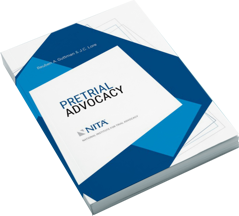
He is co-author (with J.C. Lore III of Rutgers Law) of the textbook, Pretrial Advocacy (Wolters Kluwer Spring, 2021). He is a chapter co-author (with Traci Buschner) and wrote the introduction for Remote Advocacy: A Guide to Survive and Thrive (Wolters Kluwer and National Institute of Trial Advocacy, 2020). He is co-author of False Claims Act: Representing the Plaintiffs (LEXIS/NEXIS Practice Guide, 2025).

Guttman has written or co-authored more than 100 articles or opinion pieces and multiple book chapters and law review pieces. He has been a columnist for Law360 where he writes on litigation and politics, and he has been a columnist for the Global Legal Post.

His article, Pharmaceutical Regulation in the United States; a Confluence of Influences, was translated and published in Mandarin in the Peking University Public Interest Law Journal, Vol 1, Page 187 (2010).

Guttman is a Fellow of the American Bar Foundation; he is past member of the Board of Directors of the American Constitution Society (ACS) where he is currently a member of the ACS Board of Advisors.

Guttman received his JD from Emory University and his BA in American History from the University of Rochester. He is the founder of www.whistleblowerlaws.com.

He began his legal career as a Washington DC counsel for the Service Employees International Union, AFL-CIO, where he served for five years. Guttman is licensed to practice in front of The United States Supreme Court and in Georgia, New Jersey, Pennsylvania, and the District of Columbia.

Presented by Justia Connect. Click Here to Register and for more information.

January 5, 2026 By Staff

Seminar | The Role of Litigation in Exposing Challenges in Medical Research and Healthcare

Join Reuben Guttman, JD and Daniel Aaron, JD, MD for a thought-provoking discussion exploring the role that litigation has played in uncovering systemic issues within medical research and healthcare. Led by two experienced lawyers specializing in healthcare and pharmaceutical law, this seminar will delve into how legal actions have revealed problems such as conflicts of interest, manipulative marketing practices, and economic drivers leading to overbilling and crises like the opioid epidemic. The discussion will examine whether regulators, including the FDA, CMS, and Medicaid, have adequately responded to these revelations, and propose strategies to better align industry practices with public interest.

Click here to register or learn more: https://mailchi.mp/consilium-scientific/7b4b3umjdp

About the Speakers:

Reuben Guttman is a founding member of Guttman, Buschner & Brooks, PLLC where his practice involves civil rights, whistleblowers, class actions and complex litigation.
The International Business Times has referred to him as “one of the world’s most prominent whistleblower attorneys.” Citing “wins recouping billions of dollars for the federal and state governments,” Boston Globe’s STAT News referred to him as the “The Lawyer Pharma Loves to Hate.”
 
Guttman has represented workers, unions, and pension funds in complex litigation. For over a decade, he has served as the chief outside counsel to the Oil, Chemical & Atomic Workers International Union, AFL-CIO/CLC, in a series of labor and environmental cases that enhanced safety and environmental conditions at Manhattan Project nuclear weapons sites while driving dread disease compensation legislation for nuclear weapons workers across the nation.
 
In 2020, he served as lead counsel in a federal class action lawsuit against the South Carolina Department of Corrections and secured a consent order mandating Hepatitis C testing and treatment for 17,000 inmates.
 
Guttman is currently a faculty member of the American University School of Public Affairs where he teaches Equal Protection/Civil Rights, and he has been an Adjunct Professor at Emory Law School and a Senior Fellow at Emory Law’s Center for Advocacy and Dispute Resolution.
 
Guttman received his JD from Emory University and his BA in American History from the
University of Rochester. He is the founder of www.whistleblowerlaws.com. He began his legal career as a Washington DC counsel for the Service Employees International Union, AFL-CIO, where he served for five years. Guttman is licensed to practice in front of The United States Supreme Court and in the states of Georgia, New Jersey, Pennsylvania, the District of Columbia.
 

Dr. Daniel G. Aaron is an Associate Professor of Law at the S.J. Quinney College of Law, University of Utah.  He received his JD from Harvard Law School and his MD from the Boston University Chobanian & Avedisian School of Medicine.  
 
Professor Aaron’s research examines how the law shapes life and death in the United States and the legal and social trends that explain the fall in American life expectancy.  This involves studying breakdowns in regulatory and legal systems that contribute to American mortality and wrestling with how to repair them.  To this end, he has published articles on the intersection of food and drug law, administrative law, tort and multidistrict litigation, tobacco, racial inequity, corporate power, and regulatory capture.
 
Prior to joining the law school, Professor Aaron clerked for the U.S. Court of Appeals for the Sixth Circuit with Judge John K. Bush. Before that, he served as Assistant Chief Counsel at the U.S. Food and Drug Administration.  During that time, he was also a Heyman Fellow at Harvard Law School, and he is a member of the Justice Initiative, a collaboration between Harvard Law School and Howard University School of Law aimed at providing law students a community space to discuss the intersection of race, justice, and the law. 

Click here to register or learn more: https://mailchi.mp/consilium-scientific/7b4b3umjdp

  • Page 1
  • Page 2
  • Page 3
  • Interim pages omitted …
  • Page 38
  • Go to Next Page »

Primary Sidebar

Information

  • Where to Start
  • Whistleblower Information
  • Federal & State False Claims Acts
  • Protecting Whistleblowers
  • CLE for Attorneys

Law Flash

What to DOGE about Fraud, Waste, and Abuse?

Unless you’ve been living under a rock, you’ve seen the headlines. “Department of Defense pays $32,000 to replace 25 coffee cups.” “Boeing overcharges Air Force by 8,000% for soap dispensers.” While … [Read More...] about What to DOGE about Fraud, Waste, and Abuse?

Footer

Guttman Buschner PLLC

Washington DC Office
Embassy Row District
1509 22nd Street, NW
Washington, D.C. 20037
Phone: 202-800-3001

Home
Areas of Practice
Successes
Articles
Attorneys & Advisors
CLE Seminars
Amicus
Videos
Contact Us
On Demand CLE: Reuben Guttman, and Professor JC Lore present CLE covering topics in their book, Pretrial Advocacy, Wolters Kluwer-NITA (2021).”
To learn More
More about the book here
More CLEs by GB Attorneys

Articles

State-backed whistleblower suit claims neglect in Delaware prison care

CLE: Essential Evidence Rules for Today’s Litigators

CLE: Why Mediation Fails and How to Fix It: A Strategic, Political, and Practical Approach to Case Resolution | myLawCLE

More Articles

Copyright © 2026 · Guttman Buschner PLLC
Disclaimer