• Skip to primary navigation
  • Skip to main content
  • Skip to primary sidebar
  • Skip to footer

Guttman Buschner LLP

  • Home
  • Areas of Practice
    • High Impact Litigation
    • Whistleblower and False Claim Cases
    • Personal Injury & Wrongful Death
    • Employment Litigation and Civil Rights – Employees
    • Employment Counseling and Litigation – Employers
    • Dispute Resolution and Investigation
    • Corporate Governance
  • Successes
  • Articles
  • Attorneys & Advisors
    • Reuben A. Guttman
    • Traci L. Buschner
    • Judge Nancy Gertner (Ret.)
    • Dan Guttman
    • Dr. Caroline Poplin
    • Elizabeth H. Shofner
    • Paul J. Zwier II
    • Dr. Lisa Wollman, MD
    • Rick Mountcastle
  • CLE Seminars
  • Amicus
  • Videos
  • Contact Us
    • Twitter
    • Facebook
    • LinkedIn

Articles

February 11, 2025 By Staff

What the judicial branch can do when a president refuses to comply with a court order

NPR speaks with retired federal judge Nancy Gertner about how the judicial branch could, or could not, enforce a court order against a sitting president who refuses to comply.

Click here to listen to the interview with Judge Nancy Getner (Ret.) for more information.

Excerpt:

LEILA FADEL, HOST:

A federal judge in Rhode Island says the White House has defied an order to unfreeze federal grant and program funds and is ordering the administration to immediately end any federal funding pause. And this case is just one of dozens of lawsuits that have been filed to try to block some of President Trump’s many executive actions that are pushing legal limits. But what if the Trump administration just ignores court rulings?

* * *

GERTNER: Well, the – a court – a judge has tools available to him or her in the first instance. You know, they can cite the parties in front of them for contempt. They can impose fines. Of course, since one of the parties, arguably, here is Elon Musk, it’s not clear that fines are going to make a particle of difference. There’s even the possibility of imprisoning someone until the order is followed. All of these are, obviously, empty threats with respect to the defendants in this case. The marshals would have to enforce whatever orders the judge entered. The problem is that the Marshals Service is under the Department of Justice, and if Trump wanted to fully not comply, he could direct the Department of Justice not to comply. At that point, you have a full unconstitutional crisis. You have one branch of the government ignoring the legitimate comments – the legitimate orders, rather, of another branch.

Let me also say the other thing available to the – to Trump, if he doesn’t agree with the judge, is to appeal. And so to some degree, hastening a constitutional crisis says something about what he’s trying to do, which is more about showing his power than it is about following the law.

* * *

The question is whether or not Trump is exercising power in a legitimate way. And when he violates the Administrative Procedure Act, which says that you can change regulations only if you follow certain procedures, when he violates the Privacy Act, threatening to release the names of the FBI agents who arguably participated in January 6, when he holds up the funding of programs that have been appropriated by Congress – that’s the question of whether or not he’s acting in a legitimate fashion. And these cases are essentially saying there’s nothing remotely legitimate about what the president is doing under these circumstances.

I can’t say – I can’t emphasize enough how difficult it is for a judge to enter a temporary restraining order, which is the case in these cases. You have to find the likelihood of success on the merits, and you have to find irreparable harm. And the bar is high. It says something about how far Trump has gone from what the legitimate lawmaking function is in these cases that judges are doing this.

__________

Read full transcipt here.

October 17, 2024 By Staff

The Lawyer Pharma Loves to Hate

A conversation about the False Claims Act

October 17, 2024, 5-7pm
Georgetown Law Students Association, Corporate Crime & Anti-Corruption, Georgetown Law School

June 27, 2024 By Staff

Prejudicial Evidence Takeaways From Trump Hush Money Trial

The Manhattan District Attorney’s Office’s prosecution and conviction of former President Donald Trump on 34 felony counts provides a lesson on evidence — specifically, the rules governing what’s admitted and what’s excluded.

As trial lawyers, we’ve likely all experienced at some point a kidney-punch objection[1] from opposing counsel — the kind that often comes during openings and closings, and that has the potential to derail your train of thought, if not the case narrative as a whole.

“Objection, prejudicial!” your opposition tells the judge.

One might reasonably and simply respond that “it’s evidence, it’s supposed to be prejudicial.” We introduce it to prejudice the judge or jury in favor of our client’s case. The more relevant question is whether the evidence may cause substantial unfair prejudice — or whether its prejudicial potential is perfectly fair within the bounds of the law.

Such episodes make one reflect on how many times we see attorneys misstating or misunderstanding Rule 403 of the Federal Rules of Evidence and its state court analogs. And of course, during the recent Trump prosecution, the nation watched as pundits sought to explain these matters to a lay audience.

Rule 403 provides that “[t]he court may exclude relevant evidence if its probative value is substantially outweighed by a danger of one or more of the following: unfair prejudice, confusing the issues, misleading the jury, undue delay, wasting time, or needlessly presenting cumulative evidence.” The word “substantially” is often neglected by some attorneys who invoke the rule.

Rule 403 must be read in context with Rule 401, which governs relevancy and defines evidence as relevant if: “(a) it has any tendency to make a fact more or less probable than it would be without the evidence; and (b) the fact is of consequence in determining the action.” Hence, the question is whether it is “probative” — a word used in Rule 403 but not Rule 401 — with regard to deciding a fact in dispute.

As Rule 401 does not delineate between direct and circumstantial evidence, the rule allows fragments of evidence — evidence that does not speak for itself and which we call “circumstantial” — to be admitted, leaving it to counsel to argue inferences from that evidence.

The check against Rule 401’s liberal definition of relevancy is Rule 403’s filter that allows the judge discretion to exclude evidence whose probative value is, for example, substantially outweighed by its danger of unfair prejudice. Again, the operative words are “substantial” and “unfair prejudice.”

What the rule contemplates is a balancing test. If one were to envision a scale, the scale would have to be substantially tipped — or as the rule says “substantially outweighed” — toward the rule’s delineated dangers to merit exclusion.

In the 2012 case of United States v. Boros[2], the U.S. Court of Appeals for the Seventh Circuit outlined a framework for challenging evidence that otherwise has probative value. The court explained:

The amount of prejudice that is acceptable varies according to the amount of probative value the evidence possesses. “[T]he more probative the evidence, the more the court will tolerate some risk of prejudice, while less probative evidence will be received only if the risk of prejudice is more remote.”[3]

In People v. Trump, the testimony of porn star Stormy Daniels raised the issue of when probative evidence may be excluded. Trump, of course, was prosecuted for essentially disguising hush money expenditures to Daniels as retainer payments to attorney Michael Cohen.

Integral to the prosecution’s case was proving Trump paid the money, that he paid it to prevent the dissemination of damaging information during his 2016 campaign — hence making this a campaign expense — and that the payments were falsely reported on business records as legal expenses to the former president’s then-counsel, Michael Cohen.

When Daniels testified not just to the existence of a relationship with Trump, but to the intimate details of the relationship, pundits questioned whether those details should have been excluded.[4] Indeed, at times, New York Supreme Court Justice Juan M. Merchan himself tried to reel in the testimony. He also pointed out that the defense could have or should have objected.[5]

Though Daniels’ testimony was no doubt prejudicial in that it had the potential to sway decision-makers in favor of the prosecution’s case, the question is whether it was prejudicial in the probative sense contemplated by Rule 401, or whether some of it caused “collateral damage” or “unfair prejudice” that substantially outweighed its probative value.

For example, Daniels suggested that her physical involvement with Mr. Trump was unwelcome.[6] Was this information necessary to the government’s case, or was it the type of information whose probative value was substantially outweighed by the danger of unfair prejudice or even confusing the issues?[7] This was not, for example, a case of the former president’s treatment of Daniels.

The prosecution’s counterargument is that this was precisely the type of information — indeed, accusation — that could derail a presidential campaign, and explains why hush money was paid and why that expenditure was campaign-related.

More specifically, in People v. Trump, the government needed to prove that the payments were targeted to suppress not just embarrassing information, but information that would likely impair a presidential campaign. Integral to the government’s narrative were at least some details about what Daniels would have disclosed back in the waning days of the 2016 presidential campaign.

While Rule 4.06 of the Guide to New York Evidence[8] — the New York analog to Rule 403 — does not specifically provide for the exclusion of evidence that is needlessly cumulative, one could argue that, once the jury got a sense of what Daniels might have made public during the final days of the 2016 presidential campaign, testimony over every intimate detail had the potential to create “undue prejudice to a party.”[9]

Though the words of Rule 403 and its state court analogs are easy to understand, the
application of the rule is far from cookie-cutter. Where does the analysis begin? What does “substantially outweighed” mean? What about “unfair prejudice”? And why is all this important in terms of how a practitioner works through admissibility issues?

First, from the plaintiff’s perspective, use either the anticipated jury instructions or case law to outline the elements of the claim, and determine what facts need to be proven and what evidence is available to prove those facts. Be mindful that where a fact is in dispute, most of the time the plaintiff will only have circumstantial evidence, because if direct evidence were available, the “fact” would be less likely to be in dispute.[10]

Second, as to evidence that will be introduced to prove a fact in dispute, rigorously analyze whether that evidence is truly probative of a fact in dispute. Don’t drink your own Kool-Aid — play your opponent and think of the reasons why the evidence may not be probative even if it has the optics of being probative.

Third, consider whether the evidence arguably does more collateral damage to the defendant than it does to prove a fact in dispute.[11] If this is true, reevaluate whether the evidence is necessary for the case. Perhaps consider a “reverse motion” in limine to secure a ruling on the evidence before trial to avoid that kidney-punch objection. Maybe even propose to the court a jury instruction that will address your opponent’s concerns about the evidence.

While the above analysis contemplates the perspective of a plaintiff or prosecutor, the reverse logic applies for a defense lawyer. Remember that Rule 403 also contemplates the exclusion of cumulative evidence or evidence that risks confusing the jury.[12]

And the fix may not always be a matter of exclusion of all the evidence. Consider a fix from the vantage point of a judge who looks for solutions through compromise. As in the case of People v. Trump, maybe it was not possible for the defense to keep all the detailed allegations of intimacy from the jury, but perhaps it was possible to keep out more evidence than was ultimately admitted.

Where excluding the evidence may be an uphill battle, attorneys might consider asking a judge for instructions that provide the jury with a framework for evaluating the evidence.[13] Building a case is all about understanding what evidence is available and what challenges will be made to the evidence.

As for that kidney-punch objection that can knock you off guard at trial, anticipate objections, secure early rulings on potentially problematic evidence, and consider seeking remedies such as jury instructions that limit the impact of the evidence.

And remember that one important thing: Evidence is supposed to be prejudicial. That’s why we introduce it!

__________________________

Reuben Guttman is a senior founding partner at Guttman Buschner & Brooks PLLC. He is co-author of “Pretrial Advocacy” (NITA/Wolters Kluwer 2023).

[1] See, Profiles in Justice: A ‘one of a kind’ trial lawyer – The Global Legal Post at “Tip 2.”

[2] United States v. Boros, see 668 F.3d 901, 909 (7th Cir. 2012).

[3] Citing United States v. Vargas, 552 F. 3d 550, 557 (7th Cir. 2008).

[4] See, e.g., Experts: Trump lawyers “went too far” — but Stormy Daniels testimony may give them ammo for appeal | Salon.com.

[5] Most NY rules of evidence are not codified. Guide to New York Evidence (GNYE) rule 4.06 (Exclusion of Relevant Evidence) https://www.nycourts.gov/judges/evidence/4-RELEVANCE/4.06_EXCLUSION%20OF%20RELEVANT%20EVIDENCE.pdf is analogous to the Federal Rule. It provides that “A court may exclude evidence if its probative value is outweighed by the danger that its admission would: (1) create undue prejudice to a party; (2)confuse the issues and mislead the jury; (3) prolong the proceeding to an unreasonable extent without any corresponding advantage to the offering party; or (4) unfairly surprise a party and no remedy other that exclusion would cure the prejudice caused by the surprise.”

[6] See, e.g. Meritor Savings Bank, FSB v. Vinson, 477 US 57, 68 (1986) where the Court distinguishes between a relationship that is “voluntary” and one that is “welcome.”

[7] While GNYE Rule 4.06 does not use the word “substantially”, some New York Courts have read that word into the rule. See, e.g., People v. Caban, 14 NY 3d 369 (2010) (“Evidence, though relevant, may be excluded where ‘its probative value is substantially outweighed by the danger that it will unfairly prejudice the other side or mislead the jury.” Citing, People v. Scarola, 71 NY 2d 769, 777 (1988).

[8] GNYE Rule 4.06.

[9] See, People v. Petty, 7 NY3d 277, 286-287 (2006) (finding that evidence may be excluded when it is unnecessarily cumulative).

[10] See, e.g. Guttman, Reuben.

[11] See State v. Duvall 275 S.E.2d 842, 855 (N.C. App. 1981) rev’d on other grounds, 284 S.E.2d 495 (N.C. 1981), a highly publicized hit-and-run case, the court found that the trial court properly used its discretion in allowing a photograph of the victim to be entered into evidence, because the “fact that evidence may arouse the jury’s emotions is not sufficient in itself for its exclusion.”

[12] The test is always one of “substantially outweighed.”

[13] Sometimes a jury instruction may not solve the problem. See Gumm v. Mitchell 775 F.3d 345 (6th Cir. 2014), a case involving the murder and sexual assault of a child, the court opined that testimony that a mentally disabled defendant claimed to have had intercourse with a horse was “irrelevant to the offenses charged, highly inflammatory, of exceedingly questionable veracity, and not counterbalanced by a limiting instruction or overwhelming evidence of Gumm’s guilt to render its admission harmless.”

March 23, 2024 By Staff

Overlapping Surgery and Medical Malpractice

In recent years, whistleblowers have unlocked some of the secrets of the nation’s operating rooms. Lawsuits against major teaching hospitals have exposed the practice of overlapping surgery with surgeons double- or triple-booking procedures to a degree that calls into question their ability to provide proper care for the individual patient. In fact, procedures for many patients are placed in the hands of less skilled residents and fellows.

Attorneys Reuben Guttman and Joseph Lanni, discuss these practices in their article for the Emory Law Scholarly Commons at Emory Law School. Read the full article here,

.

January 10, 2024 By Staff

What the sale of US Steel augurs for the American steel industry

The biggest steel story of the decade broke over a lazy summer Sunday in August 2023 – US Steel, the legacy steel producer that was synonymous with American steelmaking for decades, announced it had received “multiple unsolicited proposals” for the acquisition of its assets, and that the Pittsburgh-based steelmaker had started a “strategic review” of its options

January 8, 2024

By the Fastmarkets team, Rijuta Dey Bera, and Alesha Alkaff

The saga ended on December 18, with Japan’s Nippon Steel Corporation (NSC) emerging as the successful suitor for US Steel, acquiring the iconic steelmaker in an all-cash buy of $14.1 billion, plus the assumption of $800 million in debt. 

The steep premium that Nippon Steel has paid for the 123-year-old company raised many eyebrows, but it underlines the faith foreign investors have in steel demand that is expected to be generated from government legislation, including the Inflation Reduction Act (IRA) and the CHIPS and Science Act (CHIPS Act).

Nippon Steel’s investment is an example of attracting foreign investment that will rejuvenate American manufacturing, instead of offshoring it, some market participants noted.

For example, Fitch Ratings has placed US Steel’s long-term issuer default rating (IDR), senior unsecured and secured ratings on “Rating Watch Positive,” reflecting the “meaningful increase in size and earnings of the combined entity following the expected close of the acquisition of US Steel by Nippon Steel Corporation.”

“NSC’s annual steel capacity of roughly 73 million tons represents more than triple US Steel’s annual capacity of roughly 23 million tons pro forma, [with] Big River 2 coming online in 2024 and the indefinite idling of Granite City Works,” Fitch Ratings said in a report on December 21.

The Nippon-US Steel deal could birth one of the world’s largest steel companies outside of China and may result in increased competition in the global steel market, Miriam Falk, senior steel analyst at Fastmarkets, said. 

However, politicians from both sides of the aisle have expressed outrage at the thought of an all-American corporation being sold off to foreign interests, and even the Biden administration has pledged “serious scrutiny” of the tentative $14.9 billion takeover, according to a statement released on December 21 by National Economic Advisor Lael Brainard.

US Steel said in a statement sent to Fastmarkets on December 22 that it notified the administration on the day the acquisition was announced that it would voluntarily file for review. 

“Japan is an important ally to the United States, and NSC currently operates multiple steel facilities across the USA,” the statement said. “NSC is a respected and trusted company that has made substantial commitments to support US Steel’s United Steelworkers-represented employees and non-represented employees, communities and customers. This will strengthen the American steel industry, American jobs, America’s national security and America’s supply chain security.”

Reuben Guttman, partner at Guttman, Buschner & Brooks PLLC told Fastmarkets that the backlash was expected.

“Remember that US Steel is synonymous with American manufacturing,” Guttman said. “It was formed…when JP Morgan merged Carnegie Steel with Federal and National Steel. So, in a sense, the optics are selling the child of Andrew Carnegie to a foreign company. It’s not just a deal; there is emotion attached to it.”

Other market participants, however, view the takeover as just a change in ownership.

“For as big of a transaction as this was, it could not be more ‘blah’ in my opinion,” a distributor said. “There is no consolidation, and most people, including my thoughts, are that Nippon will not make any major changes.  So, it is just business as usual.”

Consolidation in the American steel industry

Consolidation in the steel industry is likely to ramp up in the near term, while integrated mills increase efficiency and technologically advance, allowing for higher productivity and capital to acquire more companies, Samir Kapadia, managing principal and head of trade at The Vogel Group, a bipartisan government affairs and consulting firm based in Washington DC, told Fastmarkets.

“That’s certainly going to be [more consolidation] in the near-to-mid-future because of the investments going into the industry,” Kapadia said. “Once those investments convert to productive operations, you’ll see more dry powder and impetus from steelmakers to acquire more market share.” 

Now, after this historical sale, the US is down to just three American-owned major steelmakers: Nucor, Cleveland-Cliffs, and Steel Dynamics, Inc. 

Consolidation and antitrust

The idea of consolidation raises questions about antitrust, which is concerned with monopolization and concerted activity that substantially affects competition, according to international trade organization the World Steel Association. 

Reuben Guttman told Fastmarkets that the deal “absolutely could raise antitrust concerns.”

“The optics of a foreign entity controlling domestic production raises major political red flags. There is great incentive to tug at any thread that can block this deal,” Guttman said.

The Nippon-US Steel acquisition is expected to make the domestic steel market more competitive, and the deal should not raise the same potential antitrust regulatory flags as if US Steel was acquired by another domestic producer, Christopher Macchiaroli, partner at Silverman Thompson, told Fastmarkets.

“While certain members of Congress from steel producing areas may raise concerns and inquire as to the status of antitrust review by relevant government agencies, I do not believe that will get much traction in the long run,” Macchiaroli said.

Before the Nippon Steel announcement, rival domestic producer Cleveland-Cliffs was believed to the frontrunner in the race to acquire US Steel; had that deal gone through, it would evoke scrutiny from the Federal Trade Commission and the Department of Justice, sources had previously told Fastmarkets.

Impact on steel pricing 

When Cleveland-Cliffs revealed that it was vying for US Steel in August, several market participants said that it would lead to increased prices across multiple steel markets. 

In November, an automotive industry group lodged its opposition to Cleveland-Cliffs acquiring US Steel, citing increased costs and an overall negative impact on the US auto market.

The detractors expressed concerns that the Cleveland-Cliffs-US Steel merger would concentrate 100% of the country’s integrated steel production under one entity, which could result in consolidation of both operations and jobs, as well as putting the ownership of nearly all US iron ore mining and processing facilities into one company’s hands.

Some steel sources correlate steep and frequent mill hikes with the fact that there are only a handful of major domestic producers in the US.

“Before, even when mills would push through price hikes, it would be in the range of $20-40 per ton at one go,” a second distributor said. 

Between October and December, domestic steelmakers pushed through multiple $100-per-ton price hikes, starting with setting the hot-rolled coil base price at $800 per short ton ($40 per cwt) on October 19 and taking it all the way to $1,100 per ton on December 6.

Consolidation’s impact on steel pricing hinges on multiple factors, including the “strategies and pricing policies adopted by the merged entity, evolving supply and demand dynamics, and global economic conditions,” according to Falk. 

Increased competitiveness could either stabilize prices through improved supply chain management or lead to more assertive pricing strategies and innovative product offerings, which would impact other domestic steel producers, Falk said.

Kapadia also stressed that steel prices are impacted by a multitude of market conditions, and not solely market consolidation. 

“Any market consolidation will increase bargaining power for the mills, which might play a role into increased prices,” Kapadia said.

This could be seen in the change in pricing environment when Cleveland-Cliffs itself went from being a raw materials supplier to being the largest flat-rolled steelmaker in the US after it purchased AK Steel for 1.1 billion and ArcelorMittal USA and its subsidiaries for around $1.4 billion, both in 2020.

These deals came about during a period when steel prices had plunged globally while the Covid-19 pandemic spread, oil prices collapsed and North American automakers halted production. 

Fastmarkets’ daily steel hot-rolled coil index, fob mill US Midwest had fallen to a low of $21.89 per cwt ($437.80 per short ton) on April 30, 2020, the lowest point in more than four years, since they were assessed at $21.50 per cwt in late March 2016.

Soon after, hot-rolled coil prices started rising dramatically due to steel shortages, setting new records every week, and ultimately reaching $98.25 per cwt on September 20 and September 27 in 2021, the highest level since Fastmarkets began pricing this market in 1960.

Navigate the complex steel markets with our reliable and market-reflective steel price data and transparent pricing methodology. Learn more.

Source: https://www.fastmarkets.com/insights/what-the-sale-of-us-steel-augurs-for-the-american-steel-industry/

  • « Go to Previous Page
  • Page 1
  • Page 2
  • Page 3
  • Page 4
  • Interim pages omitted …
  • Page 27
  • Go to Next Page »

Primary Sidebar

Information

  • Where to Start
  • Whistleblower Information
  • Federal & State False Claims Acts
  • Protecting Whistleblowers
  • CLE for Attorneys

Law Flash

What to DOGE about Fraud, Waste, and Abuse?

Unless you’ve been living under a rock, you’ve seen the headlines. “Department of Defense pays $32,000 to replace 25 coffee cups.” “Boeing overcharges Air Force by 8,000% for soap dispensers.” While … [Read More...] about What to DOGE about Fraud, Waste, and Abuse?

Footer

Guttman Buschner PLLC

Washington DC Office
Embassy Row District
1509 22nd Street, NW
Washington, D.C. 20037
Phone: 202-800-3001

Home
Areas of Practice
Successes
Articles
Attorneys & Advisors
CLE Seminars
Amicus
Videos
Contact Us
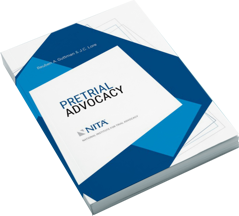
On Demand CLE: Reuben Guttman, and Professor JC Lore present CLE covering topics in their book, Pretrial Advocacy, Wolters Kluwer-NITA (2021).”
To learn More
More about the book here
More CLEs by GB Attorneys

Articles

CLE: Do You Have an Employment LawCase? Reimagining Employment Law Intake and Client Communication with AI

Former U.S. Attorney Rick Mountcastle Joins Guttman Buschner PLLC and Co-Produces Explosive Nursing Home Docuseries Premiering August 1 on Amazon

How BigLaw Executive Orders May Affect Smaller Firms

More Articles

Copyright © 2025 · Guttman Buschner PLLC
Disclaimer