• Skip to primary navigation
  • Skip to main content
  • Skip to primary sidebar
  • Skip to footer

Guttman Buschner LLP

  • Home
  • Areas of Practice
    • High Impact Litigation
    • Whistleblower and False Claim Cases
    • Personal Injury & Wrongful Death
    • Employment Litigation and Civil Rights – Employees
    • Employment Counseling and Litigation – Employers
    • Dispute Resolution and Investigation
    • Corporate Governance
  • Successes
  • Articles
  • Attorneys & Advisors
    • Reuben A. Guttman
    • Traci L. Buschner
    • Judge Nancy Gertner (Ret.)
    • Dan Guttman
    • Dr. Caroline Poplin
    • Elizabeth H. Shofner
    • Paul J. Zwier II
    • Dr. Lisa Wollman, MD
    • Rick Mountcastle
  • CLE Seminars
  • Amicus
  • Videos
  • Contact Us
    • Twitter
    • Facebook
    • LinkedIn

Articles

September 9, 2016 By Staff

Sitting with Ralph

Trial lawyer Reuben Guttman describes a meeting with renowned lawyer and political activist Ralph Nader.

Half a century after publishing Unsafe at Any Speed, a book exposing the hazards of General Motor’s Corvair, consumer advocate Ralph Nader is holding an anniversary celebration in the form of what he calls a “civic mobilisation.” The event will be held at Washington DC’s Daughters of the American Revolution (DAR) Constitution Hall, 26-29 September, 2016.

The DAR Hall itself is not without historic significance. Renowned African American singer Marian Anderson appeared there a number of times. But that was after 1939, when she had been denied the right to appear on the DAR stage and as a result thousands of DAR members, including First Lady Eleanor Roosevelt, resigned their membership. Anderson instead sang on the steps of the Lincoln Memorial.

Nader has himself been a slice of American history. He is not just a consumer advocate but, at least for my generation, has been “the” consumer advocate. His trajectory was made possible by his own efforts, those he assembled to work with him or for his causes, and not because of his ties to pre-existing institutions or parties. Fifty years after the publication of Unsafe at Any Speed, Ralph Nader is an American institution.

And so when Chris Nace, one of the nation’s leading trial lawyers, asked me to sit with Ralph Nader and a handful of other trial lawyers to hear about Nader’s plans for the “civic mobilisation,” I could not resist the opportunity. Our paths had crossed at a distance over the years through various interactions with his organisations, but I had never really had the opportunity to talk with him in a small group setting. Still, Nader seemed part of my orbit. Back in elementary school, I remember that our Weekly Reader had a feature story on “Nader’s Radars,” a group of young lawyers investigating corporate abuse. I was proud to raise my hand and tell my teacher that my older brother was one of them and working for Nader’s Center for Study of Responsive Law. Many years after I became a lawyer, I had the opportunity to serve as outside litigation counsel to the Oil, Chemical & Atomic Workers Union (OCAW); the union whose members or leaders included whistleblower Karen Silkwood and Tony Mazzochi, the father of the Occupational Safety and Health Act. The OCAW leadership recognised the symbiotic relationship between organised labour and the consumer movement and within the OCAW circles, Nader, or just “Ralph,” was a moral compass.

At the head of a conference table of trial lawyers at the law offices of Paulson & Nace, Nader talks about tort law under siege. His efforts and use of citizen’s suits and tort law have led to safer consumers goods, from automobiles to children’s toys, and yet Nader is mystified that the proponents of these suits are in some circles characterised as ambulance chasers while those that defend the abuses of corporate greed are deemed “white shoes” lawyers.

He talks about the compulsory arbitration which is privatising the judicial system and eliminating the published precedent that forms the backbone of the common law tradition. He muses about the ethics of corporate lawyers – as officers of the court – who bolt compulsory arbitration clauses into contracts for consumer goods and services and thus eliminate any right to adjudication in an open court of law, including trial by jury. He notes how even his Harvard Law School classmate, Professor Arthur Miller, one of the most cited experts on the Federal Rules of Civil Procedure, has written about the Supreme Court rulings on class actions, and pleading and summary judgement standards that have tipped the litigation playing field in favour of large corporations and against consumers.

At 82, Nader is still an imposing physical and intellectual presence. He is tall and trim and speaks forcefully about the way the judicial system ought to work.

Nader talking about the practice of law is like listening to an Ivy League Law School Professor from the movie The Paper Chase. And yet, ironically, Nader – who wants to address issues that impact every day consumers – may very well be too practical in terms of his goals to be a tenured professor at a contemporary American Law School. Would US News – which ranks law schools – even give bonus points to a school that placed Nader on its faculty? For his September “civic mobilisation,” Nader would welcome the attendance of law students, but hints at concern that the modern legal theorists who serve as professors in our nation’s legal institutions will not see value in encouraging students to forgo class and listen to talks from some of the nations’ leading practitioners, whistleblowers and scholars who are involved in the practical application of consumer or tort law.

For a Washington DC gathering, the sit down with Nader is an aberration. There is no discussion of compromise or even fund raising. The talk is simply about getting the word out about the “civic mobilisation” and filling the 3,500 seats at Constitution Hall. I wonder, of course, whether such a gathering will make a difference, but remind myself that change is incremental and few people in American history have driven change impacting everyday life as much as Ralph.

September 7, 2016 By Staff

Insurers May Be Down on the ACA’s Exchanges . . . but they should be careful what they wish for

Last month, Aetna announced that it would drastically reduce its participation on the Affordable Care Act (ACA) exchanges in 2017 because of larger-than-expected losses: it will go from 15 states to four. This follows similar decisions by UnitedHealth Group and Humana. As a result, more than one third of the exchanges next year will have only one participating insurer, so no competition at all. As early as May, even before the insurers’ announcements, analysts were predicting double-digit premium increases in 2017.

Why is this happening?

The Obama administration, as well as stalwart supporters in the policy community, have rushed to assure us that nothing much is happening: some bumps along the way were to be expected in such a grand experiment, and the Department of Health and Human Services (HHS), working with other stakeholders, will make it right.

Maybe.

Keep in mind that the whole point of the ACA was to placate private, for-profit health insurers, the group that destroyed Hillary-care in the 1990’s. (Remember Harry and Louise?) The companies did not want to lose their customers in the individual market — the healthy and the wealthy — and those customers, who had qualified for insurance, wanted to keep it.

But before the ACA, something like 40 million Americans had no access to health insurance, let alone healthcare; many more were underinsured. People demanded better. Centrist Democratic leaders — today we would call them the political elite — were determined to show that everyone could be adequately covered by commercial health insurers competing in a private market. So they filled the ACA with features designed specifically to make the new system attractive to commercial insurers.

First and most important, the federal government subsidized premiums for those with incomes under 400% of the federal poverty level ($97,000 for a family of four in 2016) — taxpayer funds that went directly to insurers. In addition, the ACA included three different programs to protect insurers from unusually costly patients (and simultaneously to prevent companies from cherry-picking healthy customers). These were known as the three ‘R’s: reinsurance, risk corridors, and risk adjustment. Only risk adjustment, under which insurers with a higher proportion of healthy customers compensate those with a sicker cohort, is permanent; the other two programs expire at the end of the year.

In exchange for these protections, insurers were required to offer every plan at the same price to all customers — that is, all plans were community-rated, with limited adjustments only for age and smoking status. No more pre-existing condition exclusions — patients with chronic illnesses could be charged no more than healthy customers. This is far and away the most popular feature of the ACA.

Nevertheless, 3 years in, insurers are complaining of losses, and voting with their feet. To reverse the downward momentum, HHS is tweaking risk adjustment, and adding a program to reimburse costs over $2 million for a single individual (to be shared among insurers).

ACA supporters have more ideas: greater outreach to eligible young, healthy people; higher penalties for failure to enroll; fewer required benefits; narrower networks. Insurers would like to adjust ratings upwards by, for example, charging the oldest customers five times more than younger ones, instead of three times more; or obtaining government reinsurance for especially costly patients; Hillary has suggested higher taxpayer-funded subsidies, and perhaps a “public option”.

Many of these measures would increase the cost of exchange policies and/or reduce their value. But the current policies are not great insurance: premiums are high. In 2015, 86% of enrollees received subsidies. Only 2% of eligible families who did not qualify for subsidies enrolled. Moreover, many families cannot access the benefits they have paid for because of high out-of-pocket expenses, especially deductibles.

The average deductible for a silver plan in 2015 was $2,994 — this in a country where 46% of families could not manage $400 for an emergency without borrowing the money or selling something. The federal limit next year for out-of-pocket expenses (including deductibles and co-pays, but not premiums) for a family is $14,300.

Under the ACA, the goal for insurers is to price their policies low enough to attract the healthy, but high enough to cover the costs of the sick. But even with giant computers, Big Data, and armies of actuaries, that may not be possible. It is certainly not the standard insurance business plan.

Commercial insurance works by charging individuals enough to cover their risk (with something left over for profit). High-risk people often cannot buy insurance at all. No one sells ordinary flood insurance to homeowners in a flood plain. We have Medicare for elderly and disabled people because they couldn’t get private health insurance. Insurers want to keep their healthy customers, and let someone else — high-risk pools, charity, the government — take care of anyone who gets sick.

But remember this: health insurance is not healthcare. Insurers are simply middlemen: if they disappeared — or were paid simply to track claims — and replaced by a Medicare-for-all system, everyone could still access healthcare. It is not clear that the value added by the industry is worth the cost, estimated at $350 billion. Spending that money directly on healthcare could improve our health, and eliminating public subsides to private insurers would reduce the deficit.

Insurers who are dissatisfied with the ACA: Be careful what you wish for.

Caroline Poplin, MD, JD, is an attorney and internist in Bethesda, Md. She is a former staff internist for the National Naval Medical Center, and currently practices medicine part-time at the Arlington Free Clinic in Virginia. She also Of Counsel & Medical Director at Guttman, Buschner & Brooks PLLC.

May 28, 2016 By Staff

SECOND CIRCUIT IMPOSES ADDITIONAL LIMITS ON CONSTITUTIONAL PROTECTION FOR OFF-LABEL STATEMENTS BY DRUG MANUFACTURERS

Off-label statements and conduct of pharmaceutical manufacturers that rise to the level of misbranding under the Federal Food, Drug & Cosmetics Act are not protected by the First Amendment. 

OVERVIEW

On May 17, 2016, the United States Court of Appeals for the Second Circuit affirmed dismissal of a False Claims Act case against Pfizer, holding that National Cholesterol Education Program (NCEP) Guidelines as to the prescription of Lipitor were advisory rather than mandatory or required by the FDA-approved label.  Accordingly, marketing outside these Guidelines did not constitute off-label promotion as relator claimed.[1]

Although this direct holding has garnered the most attention from the legal world, the Court’s clarification and cabining of its decision in United States v. Caronia is by far the more broadly significant aspect of its decision.

REASONING 

In the controversial decision of United States v. Caronia, 703 F.3d 149 (2d Cir. 2012), the Second Circuit held that the FDCA does not prohibit or criminalize the promotion of a drug’s off-label use if the promotion is truthful and not misleading in order to avoid First Amendment concerns.  However, the Caronia court reaffirmed that off-label promotion that was false or misleading did not enjoy constitutional protection.  The decision was praised by pharmaceutical manufacturers but criticized in many other quarters.  The decision is not binding outside the Second Circuit and has been sharply cabined or rejected outright by district courts in other jurisdictions.[2]  Likewise, in response to a post-Caronia bill designed to loosen the restrictions on off-label promotion, the White House issued a Statement of Administration Policy explaining that the bill “could undermine regulatory standards by allowing unproven uses of therapies to be marketed to health care payors as though such uses had been proven safe and effective.”[3]

In Polansky, a unanimous decision by the Second Circuit itself has now cabined Caronia and identified additional conduct (and statements in furtherance thereof) that do not enjoy constitutional protection.  Citing to Caronia for the proposition that there is potential value to off-label drug use and that certain off-label statements by manufacturers are permitted, the Court carefully identified off-label statements and conduct that is not constitutionally protected.  The Court explained that pharmaceutical manufacturers “are generally prohibited from promoting off-label uses of their products if the off-label marketing is false or misleading, or if it evidences that a drug is intended for such off-label uses and is therefore misbranded.” (emphasis added).  The Court further explained that a drug is misbranded “if its labeling lacks ‘adequate directions’ for safe use by a layperson ‘for the purposes for which it was intended” and affirmed that “Caronia left open” the “government’s ability to prove misbranding on a theory that promotional speech provided evidence that a drug is intended for a use that is not included on the FDA-approved label.”

IMPLICATIONS 

The implications are significant.  For example, obtaining approval for one indication and intending to market and marketing a drug for a wholly different indication upon approval qualifies as misbranding under the law and would not be constitutionally protected speech or conduct under the Second Circuit’s decision in Polansky.  Off-label statements made in furtherance of a manufacturer’s efforts to sell a drug for an indication unrelated to those for which it sought and obtained approval are not protected.  Other jurisdictions continue to take a stricter view of permissible conduct and statements, refusing to affirm the existence of constitutional protection for any off-label promotion or statements by pharmaceutical manufacturers.

Caronia  has not proven to provide the license to promote off-label that many anticipated, and pharmaceutical manufacturers should continue to proceed cautiously.

GB’s experienced team of attorneys assist qui tam relators and the United States government in prosecuting fraud and provide compliance counseling to companies wishing to avoid legal liability under the False Claims Act and other federal and state statutes. GB has litigated some of the nation’s largest qui tam cases to date.

————————————————————————————–

[1] United States ex rel. Polansky v. Pfizer, Inc., 2016 U.S. App. LEXIS 8974, No. 14-4774 (2d Cir. May 17, 2016).  Off-label promotion has long been recognized as a violation of the Federal, Food, Drug and Cosmetic Act (FDCA) and a predicate for False Claims Act liability.  Since 2004, there have been at least 31 False Claims Act settlements where a predicate allegation has been promotion of a drug in violation of the FDCA.  Many of these cases settled for billions or hundreds of millions of dollars.

[2] E.g. Hawkins v. Medtronic, Inc., No. 13-00499, 62 F. Supp. 3d 1144 (E.D. Cal. Feb. 15, 2016);Beavers-Gabriel v. Medtronic, Inc., 15 F. Supp. 3d 1021 (D. Haw. 2014); McDonald-Lerner v. Neurocare Assocs., P.A., No. 373859-V, 2012 Md. Cir. Ct. (Md. Cir. Ct. Aug. 29, 2013).

[3] STATEMENT OF ADMINISTRATION POLICY: H.R. 6 – 21st Century Cures Act (July 8, 2015), available at  https://www.whitehouse.gov/sites/default/files/omb/legislative/sap/114/saphr6r_20150708.pdf

March 20, 2016 By Staff

DE SUPREME COURT RULES ON STATUTE OF LIMITATIONS FOR BAD FAITH CLAIMS AGAINST INSURANCE COMPANY

Delaware Supreme Court rules the three-year statute of limitations for an insurance bad-faith claim accrues when an excess judgment becomes final and is no longer appealable. 

OVERVIEW
On March 4, 2016, the Delaware Supreme Court addressed when bad-faith-failure-to-settle claims accrue in the case of Connelly v. State Farm Mutual Automobile Insur. Co., Del. Supr., No. 426, 2015 (Mar. 4. 2016). In a decision authored by Chief Justice Leo Strine, the Court held that the three-year SOL accrues when an excess judgment becomes final and no longer appealable.

REASONING 
The Court began its analysis with basic principles. It first applied the condition of “good faith and fair dealing” imposed upon all Delaware contracts. The Court explained that in the insurance context, the implied covenant historically “included a duty to settle claims within policy limits where recovery in excess of those limits is substantially likely.” The Court also drew upon reasoning from jurisprudence in the area of indemnification of directors and officers. In that context, indemnity claims do not accrue until there is a final judgment. The Court reasoned that insurance claims are also a type of indemnity because the obligation to cover an indemnified party’s costs only arises if and when a final and non-appealable excess judgment to a third-party claim arises. Applying Delaware General Corporation Law (“DGCL”) Section 145, the Court determined that in non-advancement indemnity claims, the “corporation’s obligation to indemnify its fiduciary, employee, or agent, is also conditioned on that party meeting the standard of conduct.” It further held that similarities between insurance and traditional D&O indemnity claims warrant application of the same policies of “litigative efficiency and preventing waste of judicial resources that have led Delaware courts to determine that an indemnity claim accrues when there is a final judgment.”

IMPLICATIONS 
The case is particularly interesting for its application of director and officer indemnity jurisprudence outside its typical context and because many litigators will benefit from knowing when the SOL begins to run for a claim against an insurance company for bad faith failure to settle within policy limits. Although arguing for a different rule, State Farm accepted the decision “as fair,” telling the Delaware Law Weekly through counsel that “[i]t’s fine, as long as we know what it is.” The decision does provide sound guidance and needed certainty moving forward and establishes precedent for other jurisdictions to adopt.

GB will be opening its Delaware office on April 1, 2016 to better serve institutional investors and corporate clients.

March 18, 2016 By Staff

DEPARTMENT OF LABOR’S WHITE COLLAR OVERTIME RULES TO TAKE EFFECT – ARE YOU PREPARED?

Final rules that dramatically expand the class of employees entitled to overtime could take effect by spring of 2016. 

The Department of Labor (DOL) sent its final rule revising the white collar overtime exemption regulations of the federal Fair Labor Standards Act (FLSA) to the White House Office of Management and Budget (OMB) on Monday March, 14, 2016.

The proposed rule was issued in July of 2015 and would dramatically expand the class of employees entitled to overtime pay. It proposes to:

  • Increase the salary level governing the FLSA’s white collar exemptions from $455 per week ($23,660 per year) to approximately $970 per week (or $50,440 per year) and implement an automatic adjustment to the salary test going forward to ensure that salary levels continue to provide an effective and useful test for the exemption;
  • Raise the minimum salary test for the highly compensated exemption from $100,000 per year to $122,148 per year and index the level to the 90th percentile of weekly full-time employee earnings so that the level stays appropriate and relevant over time; and
  • Seek additional input as to whether the DOL should alter the duties requirements for various exemptions.

OMB review is the last step in the regulatory process before revised regulations take effect and are published in the Federal Register. The OMB is allotted 90 days to review proposed regulations, but it usually reviews and publishes proposed regulations in far less time. Accordingly, a final rule revamping the white collar overtime exemption regulations could be published as early as this spring.

IMPLICATIONS FOR EMPLOYERS
Larger and more sophisticated employers have been well aware that these changes are coming. Given the likely rollout date, it is time to start planning for them. Large and small employers can and should plan ahead to ensure they will be in compliance with the proposed salary requirements. Although potential changes to the duties test remain unclear, employers may also benefit from considering the nature and sophistication of their workforce and revisiting their staffing needs. As for employees, employees should take a hard look at their pay stubs and consider their job duties and consult a qualified attorney if they feel they are being improperly compensated.

GB assists employers in navigating the complexities of employment law and assists employees in adjudicating their rights.

  • « Go to Previous Page
  • Page 1
  • Interim pages omitted …
  • Page 19
  • Page 20
  • Page 21
  • Page 22
  • Page 23
  • Interim pages omitted …
  • Page 27
  • Go to Next Page »

Primary Sidebar

Information

  • Where to Start
  • Whistleblower Information
  • Federal & State False Claims Acts
  • Protecting Whistleblowers
  • CLE for Attorneys

Law Flash

What to DOGE about Fraud, Waste, and Abuse?

Unless you’ve been living under a rock, you’ve seen the headlines. “Department of Defense pays $32,000 to replace 25 coffee cups.” “Boeing overcharges Air Force by 8,000% for soap dispensers.” While … [Read More...] about What to DOGE about Fraud, Waste, and Abuse?

Footer

Guttman Buschner PLLC

Washington DC Office
Embassy Row District
1509 22nd Street, NW
Washington, D.C. 20037
Phone: 202-800-3001

Home
Areas of Practice
Successes
Articles
Attorneys & Advisors
CLE Seminars
Amicus
Videos
Contact Us
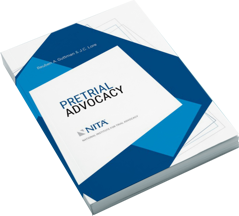
On Demand CLE: Reuben Guttman, and Professor JC Lore present CLE covering topics in their book, Pretrial Advocacy, Wolters Kluwer-NITA (2021).”
To learn More
More about the book here
More CLEs by GB Attorneys

Articles

CLE: Why Mediation Fails and How to Fix It: A Strategic, Political, and Practical Approach to Case Resolution | myLawCLE

CLE: Pharmaceutical and Medical Device Litigation: Accountability, Promotion, and Fraud Case Studies | myLawCLE

CLE: Do You Have an Employment LawCase? Reimagining Employment Law Intake and Client Communication with AI

More Articles

Copyright © 2026 · Guttman Buschner PLLC
Disclaimer