• Skip to primary navigation
  • Skip to main content
  • Skip to primary sidebar
  • Skip to footer

Guttman Buschner LLP

  • Home
  • Areas of Practice
    • High Impact Litigation
    • Whistleblower and False Claim Cases
    • Personal Injury & Wrongful Death
    • Employment Litigation and Civil Rights – Employees
    • Employment Counseling and Litigation – Employers
    • Dispute Resolution and Investigation
    • Corporate Governance
  • Successes
  • Articles
  • Attorneys & Advisors
    • Reuben A. Guttman
    • Traci L. Buschner
    • Judge Nancy Gertner (Ret.)
    • Dan Guttman
    • Dr. Caroline Poplin
    • Elizabeth H. Shofner
    • Paul J. Zwier II
    • Dr. Lisa Wollman, MD
    • Rick Mountcastle
  • CLE Seminars
  • Amicus
  • Videos
  • Contact Us
    • Twitter
    • Facebook
    • LinkedIn

Staff

January 21, 2020 By Staff

Court Grants Preliminary Approval to Settlement in Landmark Hepatitis C Case

Jan. 14, 2020 | For immediate release

COLUMBIA, S.C. – A federal court has granted preliminary approval to a class action settlement that will require the S.C. Department of Corrections to test for and treat inmates who have chronic Hepatitis C.

Earlier this year, the court entered an order approving a partial settlement requiring SCDC to initiate a program to test inmates for Hepatitis C.

“This is a major step toward eliminating a point source for Hepatitis C,” said class counsel Reuben Guttman of Guttman, Buschner & Brooks. “At a time when the rule of law is being challenged and the rights of the voiceless are in question, this case is a paradigm for how our rule of law is open to protecting everyone without regard to their place in life.”

The department started mass testing and treatment for Hepatitis C several months after the suit was filed in 2018 and has completed the process for 13,432 current and former inmates. The testing is voluntary, and some declined testing and treatment.

Of those tested, 1,389 are positive for chronic Hepatitis C. Testing for all of SCDC’s 18,125 inmates is on schedule to be completed by June 2020.

“Our goal is to provide a safe environment and sound medical treatment for all inmates, and this settlement is a big step toward accomplishing that goal,” said Bryan Stirling, Director of the S.C. Department of Corrections. “We know that about 85 percent of inmates return to society within five years, and this will save medical treatment costs for taxpayers in the long run.”

The proposed settlement takes the form of a consent decree. If it receives final approval, the court will retain jurisdiction to enforce compliance.

“This settlement is an example of what can happen when lawyers come to the table with a common objective – to give inmates the treatment they deserve as people,” said co-class counsel, Christopher Bryant of Perkins Coie.

The department received $10 million in its 2019-2020 budget for testing and treatment of Hepatitis C, which includes funding for staffing, drugs, equipment and other expenses. Treatment costs for the first quarter of 2020 is expected to be $447,326.

“We are grateful to Gov. McMaster and the General Assembly for funding this public health initiative and the S.C. Department of Health and Human Services, DHEC and USC for their support in testing and treating this highly communicable disease,” Stirling said.

The specific details of the settlement are contained in the agreement filed with the court. Notice will be provided to the class, and the parties expect the court to set a fairness hearing for final approval of the consent decree.

GBB counsel working on the case included Liz Shofner, Caroline Poplin, Nancy Gertner and Paul Zwier.

South Carolina counsel includes James Griffin of Griffin Davis Law Firm.

GBB is a nationally recognized boutique complex litigation law firm. In the healthcare area alone, it has represented whistleblowers under the False Claims Act in cases that have returned more than $5.5 billion to government treasuries. More information about the firm and its members can be found at gbblegal.com.

Case Decision and Order is available here.

Contact:
Chrysti Shain, (803) 413-8206
Shain.Chrysti@doc.sc.gov
Mimi Ramirez
202-800-3001
mramirez@gbblegal.com

Available at http://public.doc.state.sc.us/agency-news-public/homeAction.do?method=view&id=455

January 21, 2020 By Staff

Corporate Crime Reporter: Reuben Guttman on the Failure of Corporate Compliance

Corporate Crime Reporter, Volume 34, Number 3, Monday, January 20, 2020

REUBEN GUTTMAN ON THE FAILURE OF CORPORATE COMPLIANCE

Internal corporate compliance programs do nothing to address pervasive wrongdoing central to a company’s business model.

That’s the take of Reuben Guttman of Guttman, Buschner & Brooks in Washington, D.C.

“This I know from 30 years plus of litigation against corporate wrongdoers,” Guttman says.

“WorldCom, Enron and Tyco all had on paper compliance programs that would impress the lay person and might impress somebody teaching at a law school. But the misconduct was ingrained into the business model,” Guttman told Corporate Crime Reporter in an interview last week.

“Where the conduct is pervasive and part of the business model, the internal compliance program is not going to correct it,” Guttman said. “I have litigated against Abbott Labs. The company engaged in pervasive misconduct with regard to the marketing of the anti-epileptic drug Depakote. It resulted in both civil and criminal sanctions against the company. It was a total $1.6 billion settlement.”

“What we found in the Depakote case was that the existence of the corporate compliance program assuaged insiders in the corporation so that they thought there could be no wrongdoing going on. It is like – I s_aw the doctor last week so I can’t possibly be sick when in fact you could be terminally ill.”

“Compliance programs in part are being used to assuage people and not make them second guess because they believe someone else is taking care of it.”

“When we first interviewed our original client in the Depakote case – is your company off label marketing the drug? And the answer was – no, we are not off label marketing the drug. We have an internal compliance program. Everything we do is legal. We are told everything we do has to be legal.”

“But when we started getting into the actual facts of how the drug was being marketed, we saw major problems. Internal compliance programs have the ability to convince people that there can be no wrong. We saw the same situation in GlaxoSmithKline involving a number of drugs. I think the False Claims Act settlement was $1 billion. We settled on the eve of trial against Celgene for $280 million.”

“And the sales people say – we do no wrong, we are a terrific company. I have written an article about this for the Safra Center for Ethics at Harvard Law School. It’s titled – Internal Compliance – Is It Really About Compliance?”

“Our niche as a law finn is challenging corporate conduct that is pervasive and intertwined with the business model of a corporation. The conduct is so central to the business model that if you take out the conduct, it will materially impact the value of the company. It’s shareholders will take notice.”

“Where you have conduct that is central to the business model, the compliance program won’t do much. Will it make people think more about compliance? Maybe it couldn’t hurt. But what makes people sit up and notice is the Sally Yates memo of September 2015. It says, when corporations get into trouble, we are going to be looking at individual liability. The reality is that corporations can’t do what they do absent the conduct of individuals. That is going to be the best way to enforce compliance.”

“I come from a labor background. Statutory labor law has been around for about 80 years. One of the things that is central to labor law is that company dominated unions are unlawful. If a company says – you don’t need a union, we have our own union, go join our union – that’s a violation of the National Labor Relations Act.”

“In many respects you have compliance programs that are analogous to company dominated unions. Instead of an outside entity doing the investigation and making transparent the wrongdoing, the internal compliance department is the first vacuum that sweeps up the information. And the corporation decides what they want to do
with it.”

“Sometimes the information that the whistleblower is reporting has significant impact not just within the corporation but to parties outside the corporation. For example, let’s say you have a drug that is being marketed for the wrong purposes, or a drug that has been adulterated, or a medical product that is problematic and the company doesn’t resolve the full results of tests.”

If compliance programs are not working, if it’s an internal police force controlled by the corporation, what do you propose? “I’m not suggesting eliminating internal corporate compliance. I’m suggesting you not rely on it as the panacea. Maybe it doesn’t hurt. But don’t count it as the solution. Recognize that it has a serious potential to be a mechanism to conceal wrongdoing.”

“I debated somebody a number of years ago on Bloomberg. We were discussing the SEC whistleblower program. And the question was – must you go to internal corporate compliance first before you go to the SEC?”

“The corporations, the Chamber of Commerce was saying – you must go to corporate internal compliance first before you go to the SEC. My perspective was – absolutely not. At the least, you should have a choice. You don’t know whether the corporation is going to make transparent the problems that may not only impact the bottom line for the shareholders, but may involve life saving devices for consumers or devices like automobiles that cause injury.”

“Look at the GM ignition switch case. Look at Boeing. Boeing is classic. Do you really want the 737 MAX to be something that is investigated by internal compliance, remains in internal compliance and never sees the light of day?”

A strong internal compliance program would find the problem, resolve the problem and report it to the government. But from your experience within the pharnrnceutical industry – “Not just the pharmaceutical industry. But look at GM and the ignition switch. Look at Boeing.

These programs just don’t work. If these programs were working, we wouldn’t be seeing the pervasive wrongdoing we are seeing. Internal compliance is not going to have the leverage within a corporation to say – we have to take the 73 7 M AXs out of the air. That’s a really tough call for a corporation to make. That’s why you need outside regulators. You shouldn’t be cutting the company slack because it has an internal compliance program.”

“In fact, if the company has an internal compliance program and you found that the company engaged in wrongdoing, it is worse, because it means the internal compliance program wasn’t working. It means it was worthless.”

Is there any evidence that the government corporate criminal enforcement program is deterring wrongdoing? “Based on the wrongdoing I’ve seen, no.”

“Each of the big phannaceutical frauds I have seen, the companies are paying amounts of money that cause the public to take notice. But in fact, what is going on is much of the litigation across the board is effectively setting a fee for a license to break the law.”

“The litigation is not having an impact. I don’t think the corporate compliance programs are having an impact. What will have an impact is sticking to the letter of the Sally Yates memo of September 2015.”

INTERVIEW WITH REUBEN GUTTMAN, GUTTMAN, BUSCHNER & BROOKS, WASHINGTON, D.C.

Internal corporate compliance programs do nothing to address pervasive wrongdoing central to a company’s business model.

That’s the take of Reuben Guttman of Guttman, Buschner & Brooks in Washington, D.C.

“This I know from 30 years plus of litigation against corporate wrongdoers,” Guttman says. We interviewed Guttman on January 13, 2020.

CCR: You graduated from Emory Law School in 1985. What have you been doing since?

GUTTMAN: I have been doing litigation against large corporations. Between 1985 and 1990, I was counsel to the Service Employees International Union.

I was the chief outside counsel to the Oil Chemical and Atomic Workers Union (OCA W). l represented OCA W in the nuclear weapons sector. I brought significant cases against the Department of Energy and environmental and safety and health issues.

I have had a corporate fraud practice under the False Claims Act and other statutes. I have been involved in cases against the major pharmaceutical companies – Pfizer, GlaxoSmithKline, Wyeth, Celgene, Abbott Labs. And collectively these cases have resulted in recoveries totaling $6 billion.

I have done lots of litigation under the Fair Labor Standards Act against the meatpacking industry involving meatpackers in the midwest.

Primarily my expertise is corporate fraud and mismanagement. I bring securities class actions based on breaches of fiduciary duties. I have litigated the issue of whether the Hershey Corporation had to make disclosures about records regarding its use of child labor in the Ivory Coast and Ghana.

I have had a pretty broad practice over 35 years. I have reinforced that through teaching at various law schools – including Rutgers and Emory.

I’m writing a book on pre-trial litigation which will be published by Walters Kluwer hopefully in the fall. My co-author is Jason Lore at Rutgers.

I do a regular blog for the National Institute of Trial Advocacy called The Rule of Law blog. I was on the board of directors of the American Constitution Society for six years – I’m now on the advisory board. It’s been 35 years of an eclectic practice.

CCR: What is the primary practice of your law firm?

GUTTMAN: It is complex litigation involving corporations.

CCR: Is your practice exclusively plaintiffs’ side?

GUTTMAN: Yes.

CCR: What percentage of your practice is False Claims Act?

GUTTMAN: Seventy percent.

CCR: Other than False Claims Act, what kind of cases do you bring?

GUTTMAN: We have a large class action under ERISA against the mortgage servicers. It’s a novel theory. The court has sustained our complaint. I’m sitting in South Carolina now.

We are settling a civil rights class action against the South Carolina prison system. The settlement will require the treatment of thousands of prisoners for Hepatitis C. It has partially settled already. It requires the state to test prisoners.

We are involved in derivative litigation in Delaware.

CCR: You are primarily a False Claims Act firm.

GUTTMAN: We actually litigate non-intervene cases. For Celgene, we settled on the eve of trial. We took tons of depositions. We are trial lawyers. We are not lawyers who put the case in play hoping the government will settle.

Right now we are suing Massachusetts General Hospital in a non intervene case. We are litigating against a urologist in New York City in a nonintervene case. We settled the intervene portion of it for $12.3 million in November.

We are always in discovery, we are always taking depositions.

CCR: Are you saying that the majority of your False Claims Act cases are non-intervene cases?

GUTTMAN: A decent percentage of them. We litigate more False Claims Act cases than anybody else in the country. That’s just my perspective.

CCR: How many False Claims Act cases do you have going at any one time?

GUTTMAN: We get anywhere between 500 and 1,000 knocks on the door a year. We will cull that down to four, five or six False Claims Act cases that we take a year.

We vet these cases so heavily that by the time they get to the government, the government is looking at a case that is strong on the merits.

CCR: You have a strong filter. Do you know pretty much know within the first couple of minutes of talking with a whistleblower whether or not it’s going to be a case for your or not?

GUTTMAN: We can tell from the first twenty or thirty minutes. Let me give you an anecdote. A number of years ago I had a case against Abbott Labs.

The case settled for $1.6 billion. 1 asked the government lawyer a little while after the case settled – when did you realize it was a good case? And the government lawyer said – about 30 minutes into the client interview. We can pretty much tell up front whether it has some heft, whether it’s a case that we are going to dig into and investigate. There are ways to eliminate cases quickly.

CCR: How many cases are you carrying at any one time?

GUTTMAN: Dozens.

CCR: How many cases do you settle a year?

GUTTMAN: In the last five years, we have been resolving four or five cases a year.

CCR: We posted a story on Twitter from the Wall Street Journal about an interview with a Justice Department official, Matt Miner. He was talking about how internal compliance programs can help prevent corporate crimes. You went onto our Twitter feed and wrote – “Internal compliance programs do nothing to address pervasive wrongdoing central to a company’s business model, as in Enron, Tyco and WorldCom. This I know from 30 years plus of litigation against corporate wrongdoers.”

I read that to Duke Law Professor Sam Buell. He told us this – “This guy is saying – I’ve seen companies spend lots of money on compliance and it didn’t make a difference because they were thoroughly corrupt and everyone in the company didn’t care about compliance. But other people will say- I’ve seen companies with good compliance who generally stayed away from enforcement actions. Or I’ve seen companies with bad compliance but they got better; and their problems with the government decreased. Everyone is talking anecdotes. Companies are enormously complex. They are the most complicated things we have in our society. They become extremely difficult to study empirically.”

GUTTMAN: I was at Milberg Weiss and Grant & Eisenhofer. At Milberg, we were part of the Enron litigation. Milberg was also part of the Worldcom litigation.

When I was at Grant & Eisenhofer, they were part of the Tyco litigation. WorldCom, Enron and Tyco all had on paper compliance programs that would impress the lay person and might impress somebody teaching at a law school. But the misconduct was ingrained into the business model.

Where the conduct is pervasive and part of the business model, the internal compliance program is not going to correct it. I have litigated against Abbott Labs.

The company engaged in pervasive misconduct with regard to the marketing of the anti-epileptic drug Depakote. lt resulted in both civil and criminal sanctions against the company. It was a total $1.6 billion settlement.

What we found in the Depakote case was that the existence of the corporate compliance program assuaged insiders in the corporation so that they thought there could be no wrongdoing going on. It is like – I saw the doctor last week so I can’t possibly be sick when in fact you could be terminally ill. Compliance programs in part are being used to 14 CORPORATE CRIME REPORTER MONDAY JANUARY 20, 2020 assuage people and not make them second guess because they believe someone else is taking care of it.

When we first interviewed our original client in the Depakote case – is your company off label marketing the drug? And the answer was – no, we are not off label marketing the drug. We have an internal compliance program. Everything we do is legal. We are told everything we do has to be legal. But when we started getting into the actual facts of how the drug was being marketed, we saw major problems. Internal compliance programs have the ability to convince people that there can be no wrong. We saw the same situation in GlaxoSmithKline involving a number of drugs. I think the False Claims Act settlement was $1 billion. We settled on the eve of trial against Celgene for $280 million.

And the sales people say – we do no wrong, we are a terrific company. I have written an article about this for the Safra Center for Ethics at Harvard Law School. It’s titled – Internal Compliance – Is It Really About Compliance?

Our niche as a law firm is challenging corporate conduct that is pervasive and intertwined with the business model of a corporation. The conduct is so central to the business model that if you take out the conduct, it will materially impact the value of the company. It’s shareholders will take notice. Where you have conduct that is central to the business model, the compliance program won’t do much. Will it make people think more about compliance?

Maybe it couldn’t hurt. But what makes people sit up and notice is the Sally Yates memo of September 2015.

It says, when corporations get into trouble, we are going to be looking at individual liability. The reality is that corporations can’t do what they do absent the conduct of individuals. That is going to be the best way to enforce compliance. 1 come from a labor background. Statutory labor law has been around for about 80 years. One of the things that is central to labor law is that company dominated unions are unlawful.

If a company says – you don’t need a union, we have our own union, go join our union – that’s a violation of the National Labor Relations Act. In many respects you have compliance programs that are analogous to company dominated unions.

Instead of an outside entity doing the investigation and making transparent the wrongdoing, the internal compliance department is the first vacuum that sweeps up the information. And the corporation decides what they want to do with it.

Sometimes the information that the whistleblower is reporting has significant impact not just within the corporation but to parties outside the corporation.

For example, let’s say you have a drug that is being marketed for the wrong purposes, or a drug that has been adulterated, or a medical product that is problematic and the company doesn’t resolve the full results of tests.

We are now suing Massachusetts General Hospital for overlapping surgeries. The allegations are that they completely overlapped.

CCR: What do you mean by overlapped?

GUTTMAN: In the orthopedic area, you book patients whose~urgeries overlap. The surgeon is running from one surgery to another. We just settled such a case against another hospital in New York City. It’s a Medicare fraud case.

CCR: If compliance programs are not working, if it’s an internal police force controlled by the corporation, what do you propose?

GUTTMAN: I’m not suggesting eliminating internal corporate compliance. I’m suggesting you not rely on it as the panacea. Maybe it doesn’t hurt. But don’t count it as the solution. Recognize that it has a serious potential to be a mechanism to conceal wrongdoing.

I debated somebody a number of years ago on Bloomberg. We were discussing the SEC whistleblower program. And the question was – must you go to internal corporate compliance first before you go to the SEC?

The corporations, the Chamber of Commerce was saying – you must go to corporate internal compliance first before you go to the SEC. My perspective was – absolutely not.

At the least you should have a choice. You don’t know whether the corporation is going to make transparent the problems that may not only impact the bottom line for the shareholders, but may involve life saving devices for consumers or devices like automobiles that cause injury.

Look at the GM ignition switch case. Look at Boeing. Boeing is classic. Do you really want the 737 MAX to be something that is investigated by internal compliance, remains in internal compliance and never sees the light of day?

CCR: A strong internal compliance program would find the problem, resolve the problem and report it to the government. But from your experience within the pharmaceutical industry –

GUTTMAN: Not just the pharmaceutical industry. But look at GM and the ignition switch. Look at Boeing. These programs just don’t work. If these programs were working, we wouldn’t be seeing the pervasive wrongdoing we are seeing. Internal compliance is not going to have the leverage within a corporation to say- we have to take the 737 MAXs out of the air. That’s a really tough call for a corporation to make. That’s why you need outside regulators. You shouldn’t be cutting the company slack because it has an internal compliance program.

In fact, if the company has an internal compliance program and you found that the company engaged in wrongdoing, it is worse, because it means the internal compliance program wasn’t working. It means it was worthless.

CCR: Is there any evidence that the government corporate criminal enforcement program is detening wrongdoing?

GUTTMAN: Based on the wrongdoing I’ve seen, no.

Each of the big pharmaceutical frauds I have seen, the companies are paying amounts of money that cause the public to take notice. But in fact, what is going on is much of the litigation across the board is effectively setting a fee for a license to break the law.

The litigation is not having an impact. I don’t think the corporate compliance programs are having an impact.

What will have an impact is sticking to the letter of the Sally Yates memo of September 2015.

CCR: Of your practice, what part of the False Claims Act cases are FCPA or Medicare fraud or other?

GUTTMAN: There is overlap. You could have a situation where a company is unlawfully marketing a drug. And they are not making that disclosure to the public. In a large pharmaceutical fraud case, you are going to have a securities component. We have been involved in a number ofFCPA cases.

CCR: Has the plaintiffs bar moved over the years from primarily class actions to primarily False Claims Act cases now?

GUTTMAN: It’s a complicated question. Elizabeth Burch is a professor of law at the University of Georgia. She has just published a book titled Mass Torts. It would be worth interviewing her on this.

In 1965, Ralph Nader published Unsafe at Any Speed. Before that book, people thought – if you got into a car accident, it was your fault. Nader made people think – it could be a defect in the automobile. He was the impetus for plaintiffs’ class
actions.

In 1968, Congress passed the multi-district litigation (MDL) statute. The courts needed to figure out how to address the 3,000 price fixing cases in the electrical transmission industry. There was an informal mechanism to do that. And that was codified in 1968.

With the rise of the class actions, the defense bar organized and made it harder to certify a class action. I’m actually arguing a class action certification case tomorrow, so it’s on my mind.

By the 1990s, you had two Supreme Court asbestos cases. And with those cases, the Supreme Court made it more difficult to certify class actions. Because cases were not being certified, you had all of these mass tort cases being brought as individual cases. Lawyers on both sides sought to use the MDL process.

It’s not that people are moving into false claims as much as people are moving into these MDL mass tort cases.

Of course, some product liability attorneys want to get into the false claims area. But the reality is that the false claims bar, to some degree, is the impetus for a lot of these cases. We bring the big pharma false claims cases and other cases follow.

Another thing that has been happening is that the courts have been cracking down on access to the courts. The pleading standards have been toughened.

When I got out of law school, there was something called notice pleading. As long as you put the other side on notice about what the case was about, that was enough.

In 2007 or 2008, the Supreme Court came down with a couple of cases requiring the pleading of facts. You can’t just plead conclusions. If you plead conclusions, the court will strip out the conclusion. And then the court will apply a plausibility standard.

And a judge will look at a case and say – is this case plausible? In a false claims case, you have to plead fraud with particularity or specificity. These cases are front loaded in the sense that you have to do the investigation up front. You have to prove a case that the government thinks is a good case – not a case you think is a good case. All of those are filters that whittle down access.

CCR: There is a public debate over the role of the trial lawyer in society. A case can be made that big business has defeated the trial lawyers in the court of public opinion. Why did that happen?

GUTTMAN: I don’t think they have won the debate. Everything we have in this country that makes us safer is the result of transparency in the court system – the trial lawyers.

The trial lawyers brought us Brown v. Board of Education. The trial lawyers brought us Loving v. Virginia – the right to marry who you want to marry without regard to race.

The trial lawyers brought us safer automobiles, seat belts. They exposed the dangers of lead paint. The trial lawyers brought us safer food. We can live safer healthier lives because of trial lawyers.

CCR: You are making the argument. But regular people don’t like trial lawyers.

GUTTMAN: I haven’t done polling. I’m going to court tomorrow morning. I try cases. I have a comfort level because I know I’m saving people’s lives tomorrow morning when I am going to get Hepatitis treatment for thousands of pnsoners.

The state of South Carolina prison system is going to be testing 20,000 people and treating them. I know I’m having an impact.

I have brought cases that have saved people from drugs that are harmful to them. Maybe trial lawyers are not getting the message out. I teach and have a broader public policy perspective.

I try to take cases that have a broader impact. I want to leave the world a better place. I went to law school so that I could do things that make the world a better place.

Contact: Reuben Guttman, Guttman, Buschner & Brooks, 2000 P Street, NW. Suite 300, Washington, D.C. 20036. Phone: 202.800.3001. Email: rguttman@gbblegal.com

January 15, 2020 By Staff

Multi-million dollar settlement in SC prison hepatitis C case gets initial approval

By John Monk, TheState.com

Update: Case Opinion and Order available here.

COLUMBIA, S.C. A multi-million dollar class action lawsuit brought by inmates at the S.C. Department of Corrections over a lack of treatment for potentially fatal hepatitis C received initial approval by a federal judge on Tuesday.

Judge Margaret Seymour gave preliminary approval shortly before noon Tuesday at the federal courthouse in Columbia after hearing from lawyers representing the prison system and its director, Bryan Stirling, and also lawyers representing inmates who have tested positive for hepatitis C, a liver disease.

“This action today is going to save 1,184 lives,” inmates’ lawyer Reuben Guttman told Seymour during the hearing.

Actually, the number is likely to be closer to 2,000 inmates’ lives, Stirling and attorneys for the inmates said following the hearing. Nearly 5,000 of the prison system’s approximately 18,125 inmates still have to be tested, they said.

Even before Tuesday’s preliminary hearing, prison officials became aware that hundreds of inmates with hepatitis C were going unrecognized and untreated and, in reaction to the lawsuit, had instituted programs to identify and treat infected inmates.

And last year, the S.C. General Assembly — warned by Stirling of the situation — appropriated $10 million in the current fiscal year’s budget for the prison system to get started on an identification and treatment program. It will cost between $4,000 to $15,000 to identify and treat each infected inmate, Stirling said after court Tuesday. But some inmates could cost less because they are in an earlier, more easily treated, stage of the disease, he said.

That $15,000 estimated maximum cost is much cheaper than it used to cost to treat hepatitis C. The medicine that cures it over a several month process, once cost some $80,000 per sick person.

Since untreated hepatitis C can develop into diseases with very costly treatment, such as liver cancer, treating inmates in prison before their cases become serious will result in long term savings to S.C. taxpayers, Stirling said.

“Eighty-five percent of inmates return to society within five years,” Stirling said. If they are not cured in prison, they potentially can spread the disease upon release, he said.

Under the Constitution, it is “cruel and unusual” punishment to deny inmates medical treatment. Inmates have a constitutional right to appropriate and timely medical treatment, courts have consistently held.

Moreover, federal courts in numerous states have ruled against prison systems that fought spending money to identify and treat inmates with hepatitis C.

Before the lawsuit, which was filed in March 2018, the S.C. prison system had no broad-based program in place to identify and treat inmates who would test positive for hepatitis C.

The lawsuit didn’t ask for money. It asked for Corrections to offer testing to all inmates and offer treatment to inmates who tested positive for Hepatitis C. The total amount of money Corrections will spend in the future is not known at this point. The cost could run into the millions.

During the hearing, the inmates’ attorney, praised Corrections’ lawyers for working “to do right” without a lot of “constant fighting and push back. … Ultimately, what this came down to was how we get everybody with hepatitis C treated.”

Attorney Buddy Arthur, a private lawyer retained by Corrections, told Seymour that Stirling’s attitude of wanting to resolve the problems in a just way brought closure to the case. “I don’t think we would be here today if it were not for Director Stirling … if he were not willing to approach this with judgment and forward thinking,” Arthur said.

A settlement was in the best interests of both inmates and the prison system, parties to the case said after court.

Hepatitis C is spread by exposure to blood or blood products. The most common way to contract the disease is through intravenous drug use. But people also can be infected through tattooing or blood transfusions.

At Tuesday’s hearing, inmate Willie Jackson, 66, a named class plaintiff, appeared by video conference in the courtroom. He has tested positive for hepatitis C and is serving a life sentence for multiple convictions, including burglary, criminal sexual conduct first degree and grand larceny.

The class action lawsuit was begun by Christopher Bryant, a young Charleston attorney who had just finished a clerkship with U.S. Judge Richard Gergel and begun private practice. Bryant took on as a client a lone S.C. Department of Corrections inmate who had tested positive for hepatitis C and wasn’t getting treated.

Digging into the matter, Bryant — now working for the Seattle firm of Perkins Coie and based in Washington DC — found out about similar lawsuits in other states and believed his inmate’s lawsuit was a good candidate for a class action that would help all inmates. “I thought our case was rock solid — it was just a matter of how to get there.”

Bryant eventually brought Guttman and his large Washington DC firm into the case because it had class action experience and the resources to do the extensive detailed work necessary for such a complex case.

On Tuesday, Guttman, who has more than 25 years as a lawyer, told Judge Seymour that, “Twenty years from now, my claim to fame will be that I practiced law with a young lawyer named Christopher Bryant.”

Not all inmates want to be tested. Of the 13,432 inmates who were offered tests so far, 10,875 agreed to be tested. Offers of tests to all inmates should be completed by June.

Final approval is expected later this spring. A federal magistrate will monitor the progress of the prison system’s program as part of the settlement. Also representing the inmates Tuesday was Columbia lawyer Jim Griffin.

Available online at https://www.thestate.com/news/local/crime/article239271673.html

November 8, 2019 By Staff

NY Healthcare Network Pays $12.3 Mill. To Settle Claims Alleging False Medicare Billing

As a result of a lawsuit brought under the Federal False Claims Act by three whistleblowers, one of the New York area’s largest healthcare providers – Northwell Health, Inc. whose subsidiary includes Lenox Hill Hospital —  has agreed to pay $12.3 million to resolve claims that it engaged in false or fraudulent billing to the Federal Medicare system.

Northwell operates 23 hospitals and 700 outpatient centers.

The settlement covers three alleged schemes involving Urologist David B. Samadi: that (1) Northwell over-compensated Samadi in order to secure hospital referrals in alleged violation of the Physician Self-Referral Law (the “Stark Act”), (2) Northwell billed Medicare for surgeries where Samadi violated billing procedures governing overlapping surgeries, and (3) Northwell billed for procedures that were not medically necessary to perform in an operating room.

The Physician Self-Referral Law, 42 U.S.C. §1395nn, prohibits physicians from referring patients to receive “designated health services” payable by Medicare or Medicaid from entities with which the physician or an immediate family member has a financial relationship, unless an exception applies.

According to a settlement agreement executed in United States of America ex rel. George Markelson, et. al. v. David B. Samadi, M.D.  and Northwell Health, Inc. et al., “Defendants’ practices resulted in the submission of several million dollars of inappropriate claims to Medicare.”

The settlement also states that, “when portions of an endoscopic surgery in OR 21 overlapped with a surgery in OR 25, Samadi was not present in OR 21 throughout the entire period of time the scope was inserted to the time the scope was removed.” The settlement agreement also states that, “Samadi would freeze or pause the robotic equipment in OR 25 and leave the patient under the care of the anesthesiologist, operating room staff, and, in some instances, a urology resident.”  

Relators were represented by the Jacob D. Fuchsberg Law Firm, LLP, and by Guttman, Buschner & Brooks, PLLC. The Jacob D. Fuchsberg Law Firm, LLP, is a prominent medical malpractice firm and Guttman, Buchner & Brooks, PLLC, is a nationally recognized firm engaging in complex litigation and representing whistleblowers under the Federal False Claims Act and state false claims statutes.

“We exposed medical malpractice designed to inflate surgical volume, revenue, profit, and compensation and conduct that tramples on patient rights, abuses confidence in healthcare, corrupts graduate medical education, and violates the law,” said Joseph Lanni of the Jacob D. Fuchsberg Law Firm, LLP.

“While this case was filed and resolved as a matter of false or fraudulent billing to the Medicare system, in reality it was about the egregious monetization of human maladies which is all too common in healthcare delivery today,” said Reuben Guttman of Guttman, Buschner & Brooks, PLLC.

The attorneys who worked on the case from the Fuchsberg firm include Joseph Lanni, Edward Hynes, Jaehyun Oh, Alan Fuchsberg, and Bradley Zimmerman. It was Joseph Lanni who originally investigated this matter and directed the Fuchsberg firm’s efforts in developing, filing and litigating the case. 

Those working on the case from GBB include Reuben Guttman, Traci Buschner, Liz Shofner, and Nancy Gertner. 

The Jacob D. Fuchsberg Law Firm, LLP, is a prominent New York law firm representing plaintiffs in complex medical malpractice, product liability, toxic exposure, major vehicle and other personal injury cases. The firm’s attorneys, including those involved in this case, have regularly secured trial verdicts or settlements in the millions of dollars. Mr. Lanni, Mr. Fuchsberg, Mr. Zimmerman and Ms. Oh recently investigated and filed multiple lawsuits on behalf of workers at a national laboratory exposed to toxic chemicals and carcinogenic substances, including the solvents TCE, PCE and other volatile organic compounds, that received considerable attention with lengthy articles in the New York Times, Newsday, as well as on various televised news segments. The same attorneys at the firm are in the process of investigating and filing medical malpractice lawsuits involving septic shock related deaths, limb amputations, and disfigurements due to major medical errors at hospitals that appear related to negligent surgical stapler use by surgeons and inattentive postoperative care performed by improperly supervised junior residents and physician assistants. More information on the firm can be found at https://www.fuchsberg.com/ 

Guttman, Buschner & Brooks PLLC is a boutique firm whose attorneys have worked on cases recovering nearly $6 billion dollars for state and federal governments including  $280 million recovery in a non-intervened case against Celgene Corporation on the brink of trial (U.S. ex rel. Brown v. Celgene); a settlement against Humana Inc. achieved on the brink of trial (U.S. Graves ex rel. Humana). Attorneys at the firm represented the lead whistleblower in U.S. ex rel. McCoyd v. Abbott Labs, which involved the recovery of $1.6 billion for the government; one of several whistleblowers bringing FCA cases against GlaxoSmithKline in 2012, which resulted in the recovery of $1.04 billion (U.S. ex rel. Graydon v. GSK);  one of the whistleblowers bringing FCA cases against Pfizer which resulted in the recovery of $2.3 billion (U.S. ex rel. DeMott v. Pfizer); the lead whistleblowers in U.S. ex rel. Sandler and Paris v. Pfizer, which resulted in recovery of $257.4 million; the lead whistleblower in U.S. ex rel. Szymoniak v. Bank of America, which resulted in the recovery of $95 million; three of the whistleblowers FCA cases against a large hospital chain (U.S. ex rel. Doghramji v. CHS), which resulted in the recovery of $98 million; the lead whistleblower in U.S. ex rel.  Kurnik v. Amgen, which resulted in the aggregate recovery of $30 million from Amgen, Inc., Omnicare, and PharMerica Corp.; and the whistleblower in U.S. ex rel. Abrahamsen v. Hudson Valley, which resulted in a recovery of $5.5 million to the federal government and state government. More information on GBB can be found at www.gbblegal.com. The firm also maintains the following informational site for whistleblowers, the media, and academics: www.whistleblowerlaws.com 

Also available online at PRNewswire.

October 30, 2019 By Staff

Geissler v Stirling, Case No. 4:17-cv-01746-MBS

RUSSELL GEISSLER, BERNARD BAGLEY, AND WILLIE JAMES JACKSON, individually and on behalf of others similarly situated, Plaintiffs, v. BRYAN P. STIRLING, Director of the South Carolina Department of Corrections (SCDC), in his official capacity; and JOHN B. McREE, M.D., Division Director of Health and Professional Services for SCDC, in his individual capacity, Defendants.

United States District Court, D. South Carolina, Florence Division.
August 5, 2019

Attorney(s) appearing for the Case

Attorney(s) appearing for the Case
Russell Geissler, individually and on behalf of others similarly situated, Plaintiff, represented by Christopher James Bryant , Yarborough Applegate, David B. Yarborough, Jr. , Yarborough Applegate, Elizabeth H. Shofner , Guttman Buschner, PLLC, pro hac vice, Paul John Zwier , Guttman Buschner, PLLC, pro hac vice & Reuben A. Guttman , Guttman Buschner, PLLC, pro hac vice.

Bernard Bagley, individually and on behalf of others similarly situated & Willie James Jackson, individually and on behalf of others similarly situated, Plaintiffs, represented by Christopher James Bryant , Yarborough Applegate, David B. Yarborough, Jr. , Yarborough Applegate & Paul John Zwier , Guttman Buschner, PLLC, pro hac vice.

Bryan P. Stirling, Director of the South Carolina Department of Corrections (SCDC), in his official capacity & John B. McRee, MD, Division Director of Health and Professional Services for SCDC, in his individual capacity, Defendants, represented by James Rufus Bratton, III , Aiken Bridges Nunn Elliott and Tyler & Samuel F. Arthur, III , Aiken Bridges Nunn Elliott and Tyler.

OPINION AND ORDER
MARGARET B. SEYMOUR, Senior District Judge.

Plaintiffs Russell Geissler, Bernard Bagley, and Willie James Jackson individually and as class representatives for all those similarly situated bring this action pursuant to Fed. R. Civ. P. 23 against Defendants Bryan P. Stirling and John B. McRee, M.D., alleging that the South Carolina Department of Corrections (“SCDC”) has failed to screen and adequately treat inmates for chronic Hepatitis C (“HCV”).1 Plaintiffs, who are in SCDC custody, assert violations of the Eighth Amendment pursuant to 42 U.S.C. § 1983, Title II of the Americans with Disabilities Act, as amended, 42 U.S.C. §§ 12131 et seq., and the Rehabilitation Act, as amended, 29 U.S.C. §§ 791 et seq., Plaintiffs seek injunctive and declaratory relief, and Plaintiff Geissler seeks compensatory and punitive damages. ECF No. 108 at 3. The court exercises federal subject matter jurisdiction pursuant to 28 U.S.C. § 1331.

BACKGROUND
The claims Plaintiffs assert and the relief they seek concern SCDC’s alleged failure to (1) properly test prisoners in its custody for HCV and (2) properly treat prisoners in its custody who are afflicted with HCV. This Order resolves the claims pertaining to SCDC’s alleged failure to properly test prisoners for HCV (“Testing Claims”), and has no bearing on the claims related to SCDC’s policies and practices for treating inmates for HCV, or on Plaintiff Geissler’s individual claims.

Plaintiffs assert that the Centers for Disease Control (“CDC”) recommend that HCV testing be administered in a two-step process. ECF No. 108 at ¶ 42; ECF No. 149 at 2. The first step determines whether the HCV antibody is present. If the HCV antibody is present, the second step facilitates nucleic acid testing to determine if the HCV infection is current. Id. The Parties engaged in extensive written discovery and some oral discovery and, as a result of those efforts, SCDC acknowledged that it had not administered the recommended two-step process for all inmates whom SCDC had tested for HCV antibodies. ECF No. 149 at 3.

On December 4, 2018, the Parties filed a joint motion for preliminary approval of a partial consent decree to resolve the Testing Claims; the Parties subsequently filed a Revised Partial Consent Decree. On December 5, 2018, the court held a status conference on the joint motion, ECF No. 138; and, on December 6, 2018, the court granted preliminary certification to a class consisting of the following persons: “All current and future inmates in SCDC custody, with the exception of inmates who have already been diagnosed with chronic HCV,” (“Testing Class”).2 ECF No. 140. The court also preliminarily certified Plaintiffs Geissler and Bagley as Class Representatives, and preliminarily approved the Revised Partial Consent Decree as well as the notice and procedure for distributing the notice to class members. ECF No. 142. The court set a fairness hearing for February 12, 2019. ECF No. 143.

Prior to the fairness hearing, the Parties filed a Joint Motion for Final Approval of the Revised Partial Consent Decree (“Joint Motion for Approval”). ECF No. 149. Counsel represented in the Joint Motion for Approval that pursuant to the court’s order of preliminary approval, counsel posted the Revised Partial Consent Decree on www.SCHepC.com on December 19, 2018, and provided all Circuit Public Defenders with notice of the Revised Partial Consent Decree on January 11, 2019. ECF No. 149-2. SCDC posted notice of the Revised Partial Consent Decree in every housing unit of every SCDC institution and in SCDC’s intake facilities, and additionally made information regarding the Revised Partial Consent Decree available on the SCDC website and in the prison libraries. ECF No. 149-3. Counsel informed the court that as of February 5, 2018, they had received more than thirty responses to the notices. Counsel represented that “most of the[] responses have sought additional information or raised concerns regarding treatment,” and “[i]nasmuch as the Revised Partial Consent Decree addresses only the Testing Claims, these responses are not being interpreted by counsel for either side as objections to the proposed settlement of the Testing Claims.” ECF No. 149 at 6. Counsel stated they nonetheless “noted the concerns stated in the numerous letters submitted and are responding to all correspondence in an effort to further inform the concerned individuals that settlement discussions regarding the Treatment Issue have commenced and are ongoing.” Id.

The Joint Motion for Approval states that SCDC agrees to provide Class Members with testing for chronic HCV in accordance with CDC guidelines within eighteen months of the court’s approval. ECF No. 149 at 1-2. The Joint Motion for Approval represents that the Parties “have fully exhausted discovery on the Testing Claims,” id. at 7; and states that as of February 5, 2019, SCDC had taken the following actions relevant to the Testing Class: (1) provided notice of the terms of the Revised Partial Consent Decree to current SCDC inmates by posting the courtapproved notice in each prison; (2) implemented the CDC’s recommended two-step process for diagnosing chronic HCV; (3) tested Plaintiffs Geissler and Bagley for chronic HCV according to the CDC guidelines; (4) offered opt-out testing to 533 inmates and tested 442 inmates, 52 of whom (11.7 percent) tested positive for chronic HCV; (5) provided Plaintiffs’ counsel with information about the opt-out process as well as the test results and opt-out forms; and (6) provided Governor McMaster and the state legislature with accurate estimates regarding the scope of chronic HCV in South Carolina’s prison system, id. at 4 (citing Jan. 24, 2019 Letters from Defendant Stirling to the Honorable Harvey S. Peeler, Jr., President of the South Carolina Senate and the Honorable James H. Lucas, Speaker of the South Carolina House of Representatives, ECF No. 149-1). The Joint Motion for Approval further states that “[b]ased on the sample of 442 inmates that have already been tested, SCDC estimates that approximately 2,182 inmates are likely to have HCV.” Id. at 10. Counsel assert that “[t]he Revised Partial Consent Decree will allow SCDC to ascertain the precise number of inmates with chronic HCV and hopefully help prevent the spread of the disease in the prison population and the general public.” Id. Also prior to the fairness hearing, Plaintiffs filed an unopposed motion to appoint class counsel, ECF No. 152, and filed a supplemental memorandum to the Joint Motion for Approval to address the requirements of 18 U.S.C. § 3626. ECF No. 153.

On February 12, 2019, the court held a fairness hearing pursuant to Rule 23(e)(2) to determine whether the within action satisfies the applicable prerequisites for class action treatment and whether the proposed Revised Partial Consent Decree is fundamentally fair, reasonable, and adequate, and should be approved by the court. The court certified Plaintiffs’ counsel as Class Counsel and heard argument from the Parties. Mr. Bagley, a Class Representative, appeared via videoconference and informed the court that he understood the terms of the settlement and had no objection. Mr. Bagley voiced concern, however, regarding the timeline that would govern SCDC’s testing of inmates for HCV; specifically, he highlighted the likelihood that SCDC would release class members from its custody before it could test those members for HCV.3 The court expressed a similar concern, and queried counsel as to whether the Parties should redefine the Testing Class. The court also inquired as to whether any other class members were in attendance who wished to object to or be excluded from the settlement; no other class members were present or otherwise represented.

On July 22, 2019, the Parties filed a Joint Motion to Substitute Filing, asking to substitute a Partial Settlement Agreement in place of the proposed Revised Partial Consent Decree. ECF No. 166. The Parties represent that the Partial Settlement Agreement and proposed Revised Partial Consent Decree are “substantively identical” and that “no class member will be prejudiced by this substitution of documents,” and assert that “because there is no substantive change between the two documents . . . there is no need to repeat the notice period.” Id. at 2.4 The court agrees. Accordingly, the court will grant the Joint Motion to Substitute Filing and apply the Rule 23(e) fairness analysis to the Partial Settlement Agreement.

DISCUSSION
Rule 23(b)(2) provides that a class action may be maintained if Rule 23(a) is satisfied and if “the party opposing the class has acted or refused to act on grounds that apply generally to the class, so that final injunctive relief or corresponding declaratory relief is appropriate respecting the class as a whole.” Fed. R. Civ. P. 23(b)(2). Rule 23(a) states that one or more members of a class may sue as representative parties on behalf of all members only if the following criteria are satisfied: (1) the class is so numerous that joinder of all members is impracticable; (2) there are questions of law or fact common to the class; (3) the claims or defenses of the representative parties are typical of the claims or defenses of the class; and (4) the representative parties will fairly and adequately protect the interests of the class. Fed. R. Civ. P. 23(a).

With respect to the type of class certification Plaintiffs seek, Rule 23(b)(2) certification is reserved for cases where broad, class-wide injunctive or declaratory relief is necessary to redress a group-wide injury. Wal-Mart Stores, Inc. v. Dukes, 131 S.Ct. 2541, 2557 (2011) (“Rule 23(b)(2) applies only when a single injunction or declaratory judgment would provide relief to each member of the class”); Thorn v. Jefferson-Pilot Life Ins. Co., 445 F.3d 311, 329-30 (4th Cir. 2006). A class action is properly certified under Rule 23(b)(2) where the claims seek to define the relationship between the defendant and a group uniformly situated in relation to the defendant, such as where litigants seek institutional reform in the form of injunctive relief. See Dukes, 131 S. Ct. at 2557; Thorn, 445 F.3d at 329-30.

The Parties seek approval of the Partial Settlement Agreement as settlement of the Testing Claims. The claims asserted by a certified class may be settled only with the court’s approval. Fed. R. Civ. P. 23(e). Where the proposal would bind class members, the court may approve it only after a hearing and only on finding that the proposed settlement is fair, reasonable, and adequate. Fed. R. Civ. P. 23(e)(2). To determine whether the proposal is fair, the court must consider (i) the posture of the case at the time of settlement, (ii) the extent of discovery that has been conducted, (iii) the circumstances surrounding the negotiations, and (iv) the experience of counsel. See In re Jiffy Lube Securities Litig., 927 F.2d 155, 158-59 (4th Cir. 1991). “A proposed class action settlement is considered presumptively fair where there is no evidence of collusion and the parties, through capable counsel, have engaged in arm’s length negotiations.” Harris v. McCrackin, No. 2:03-3845-23, 2006 WL 1897038, at *5 (D.S.C. July 10, 2006) (citing South Carolina Nat’l Bank v. Stone, 139 F.R.D. 335, 339 (D.S.C. 1991)). In evaluating the adequacy of a class settlement, the court should consider the following: (i) the relative strength of the plaintiffs’ case on the merits; (ii) the existence of any difficulties of proof or strong defenses the plaintiffs are likely to encounter if the case goes to trial; (iii) the anticipated duration and expense of additional litigation; (iv) the solvency of the defendants and the likelihood of recovery of a litigated judgment; and (v) the degree of opposition to the settlement. In re Jiffy Lube Securities Litig., 927 F.2d at 159. The court must also inquire into whether the parties have entered into an agreement made in connection with the proposal. Fed. R. Civ. P. 23(e)(3).

The court has considered the comments offered by counsel during the fairness hearing, and has read and considered the Partial Settlement Agreement and the record as a whole and finds and orders as follows:

  1. CLASS CERTIFICATION — As discussed during the fairness hearing and demonstrated in the Parties’ motions and supplemental filings, the Rule 23(a) criteria are met here. Pursuant to Rule 23(b)(2), final certification is appropriate because the relief Plaintiffs seek is an injunction regarding SCDC’s policies and practices with respect to how SCDC tests the inmates in its custody for HCV. In certifying a class under Rule 23(b)(2), the court must be satisfied as to its ability to prescribe a uniform standard of conduct for the defendant that can be applied across the class; less important is whether the court can provide redress for injuries sustained by individual class members. Here, no class member has asked to opt-out of the Testing Class, and the Parties have not sought to include the opt-out right in the conditions of the Class. In addition, the Testing Claims seek only declaratory and injunctive relief; settlement of those claims does not prevent a class member from pursuing monetary damages. Class members who are released from SCDC custody before they can undergo testing for HCV will not receive the benefit of their class membership, but class membership does not require members to forgo any right associated with the Testing Claims.5 The court is satisfied that the Testing Claims seek relief for conduct that can be enjoined or declared unlawful as to all members of the Testing Class, Dukes, 131 S. Ct. at 2558, and that membership in the Testing Class will not pose due process concerns even for those members who may not receive the benefit of the settlement. See Rice v. City of Philadelphia, 66 F.R.D. 17, 19 (E.D. Pa. 1974) (“[T]he precise definition of the [(b)(2)] class is relatively unimportant. If relief is granted to the plaintiff class, the defendants are legally obligated to comply, and it is usually unnecessary to define with precision the persons entitled to enforce compliance . . .”). Pursuant to Federal Rule of Civil Procedure 23(b)(2), the court grants final certification of the within action as a class action for purposes of settlement of the Testing Claims only and defines the “Testing Class” as:

All current and future inmates in SCDC custody, with the exception of inmates who have already been diagnosed with chronic HCV.

  1. CLASS REPRESENTATIVE AND CLASS COUNSEL APPOINTMENT — Pursuant to Rule 23(g), the court grants final certification of Plaintiffs Russell Geissler and Bernard Bagley as the Class Representatives and further certifies Yarborough Applegate LLC and Guttman, Buschner, PLLC as Class Counsel.
  2. NOTICES — Proper notice is “an elementary and fundamental requirement of due process.” Snider Int’l Corp. v. Town of Forest Heights, 739 F.3d. 140, 146 (4th Cir. 2014) (citation omitted). Notice satisfies due process where it either (1) “is in itself reasonably certain to inform those affected,” or (2) “where conditions do not reasonably permit such notice, . . . the form chosen is not substantially less likely to bring home notice than other of the feasible and customary substitutes.” Id. (citation omitted). The form and method for notifying class members of the Revised Partial Consent Decree and its terms and conditions was in conformity with this court’s order of preliminary approval. The court is satisfied that the form and method for notifying class members of the Revised Partial Consent Decree meets the requirements of due process and constitutes the best notice practicable under the circumstances. The court agrees that the Partial Settlement Agreement is substantively identical to the Revised Partial Consent Decree and therefore no further notice period is necessary.
  3. CONSENT DECREES RELATING TO PRISON CONDITIONS — Pursuant to 18 U.S.C. § 3626(a), the court finds that the Partial Settlement Agreement is narrowly drawn, extends no further than is necessary to correct the alleged constitutional violations, and is the least intrusive means necessary to correct the alleged constitutional violations.
  4. FAIRNESS AND ADEQUACY — The court finds that settlement of the Testing Claims, on the terms and conditions set forth in the Partial Settlement Agreement, is in all respects fundamentally fair, reasonable, adequate, and in the best interest of the class members. In so finding, the court has considered the specific public interest at stake and the strength of Plaintiffs’ case, along with the posture of the litigation, the complexity, expense, and probable duration of further litigation, the circumstances surrounding the Parties’ negotiations, the experience of counsel, and SCDC’s solvency.6 See In re Jiffy Lube Securities Litig., 927 F.2d at 158-59. Specifically, the Parties have exhausted discovery on the Testing Claims and are well-apprised of the merits of the case. Further litigation would be expensive and time consuming and would not likely yield a result more favorable than the Partial Settlement Agreement. As the Parties state in their Joint Motion for Approval, “[t]he purpose of the proposed settlement is to provide Plaintiffs with the injunctive relief they requested: providing SCDC inmates with testing for chronic HCV that meets the medical standard of care asserted by Plaintiffs.”7 ECF No. 149 at 7. Additionally, there is no evidence or suggestion of bad faith or collusion, and counsel represented during the fairness hearing that the Partial Settlement Agreement is the result of settlement negotiations conducted at arm’s length and in good faith. See Kirven v. Central States Health & Life Co. of Omaha, C/A No. 3:11-2149-MBS, 2015 WL 1314086, at *5 (D.S.C. Mar. 23, 2015) (noting “[a]bsent evidence to the contrary, the court may presume that settlement negotiations were conducted in good faith and that the resulting agreement was reached without collusion”) (citing Muhammad v. Nat’l City Mortg., Inc., C/A No. 2:070428, 2008 WL 5377783, at *4 (S.D.W. Va. Dec. 19, 2008) (further citation omitted)). With respect to Class Counsel, the inquiry into the adequacy of legal counsel focuses on whether counsel is competent, dedicated, qualified, and experienced enough to conduct the litigation and whether there is an assurance of vigorous prosecution. In re Serzone Prod. Liab. Litig., 231 F.R.D. 221, 239 (S.D.W. Va. 2005) (citation omitted). As discussed at the fairness hearing, the court finds that Class Counsel meet these criteria. Furthermore, Mr. Bagley informed the court at the fairness hearing that he was satisfied with the representation provided by Class Counsel, and no class member has contested the appointment of Class Counsel.

The court has also considered the concerns voiced by Mr. Bagley and two other class members regarding the likelihood that certain class members will be released from custody before SCDC can test them for HCV. The Parties assert in the Joint Motion for Approval, and represented during the fairness hearing, that pursuant to the Partial Settlement Agreement over 18,000 inmates will be tested for HCV. The Parties further represent that due to the logistical difficulties involved in administering the test in a correctional setting, SCDC will test inmates according to facility rather than according to individual release dates. The Parties further represent that SCDC has nonetheless “set an aggressive testing schedule and is hopeful that it will be able to complete the testing for all currently incarcerated inmates by September 2019.” ECF No. 149 at 9. The court understands and is sympathetic to the concern that as SCDC works to administer the test facility-by-facility, some class members will be released from custody before SCDC can test them for HCV. However, to the extent that concern constitutes opposition to the settlement, such opposition is outweighed by the benefit the Testing Class and the public will derive from the Partial Settlement Agreement.8 In addition, to the extent that concern could be interpreted as an objection to the Partial Settlement Agreement, the court overrules the objection.

Finally, counsel represented during the fairness hearing that the Parties have entered into no other agreement with respect to the Partial Settlement Agreement. Accordingly, for these reasons, the court finds the Partial Settlement Agreement to be fair, adequate, and reasonable.

  1. SETTLEMENT TERMS — The Partial Settlement Agreement is granted final approval and shall be consummated in accordance with the terms and provisions thereof, except as may be amended by any order issued by this court. The Parties are hereby directed to perform the terms of the Partial Settlement Agreement. All class members who were provided notice of the Partial Settlement Agreement are bound by the terms of it.
  2. ATTORNEY FEES — Plaintiffs’ attorneys have not sought fees at this time.
  3. FUTURE ACTIONS PROHIBITED — The court hereby permanently enjoins and restrains all class members from commencing or prosecuting any action, suit, claim, or demand against Defendants for declaratory or injunctive relief based on the Testing Claims.
  4. NO ADMISSION OF LIABILITY — This order is not, and will not, be construed as an admission by Defendants of any liability or wrongdoing in this or in any other proceeding.
  5. CONTINUING JURISDICTION OVER SETTLEMENT — The court hereby retains continuing and exclusive jurisdiction over the Parties and all matters relating to the within action and Partial Settlement Agreement, including the administration, interpretation, construction, effectuation, enforcement, and consummation of the settlement and this order, and attorneys’ fees.

CONCLUSION
The Joint Motion to Substitute Filing, ECF No. 166, is GRANTED and the Partial Settlement Agreement, ECF No. 166-1, is substituted for the Revised Partial Consent Decree. The Joint Motion for Final Approval, ECF No. 149, is GRANTED and the Partial Settlement Agreement, ECF No. 166-1, is APPROVED.

IT IS SO ORDERED.

FootNotes

  1. Plaintiff Russell Geissler initiated this action on June 30, 2017 with the pro se filing of a prisoner complaint. ECF No. 1. The court granted Plaintiff Geissler leave to proceed in forma pauperis, ECF No. 9, and ultimately granted his motion for appointment of counsel, ECF No. 72. Counsel for Plaintiff Geissler entered his appearance on January 10, 2018. ECF No. 75. On August 21, 2018, Plaintiffs sought and received leave to file a third amended complaint (“Complaint”), which remains the operative pleading. ECF No. 108.
  2. Hereafter, any reference to “class” is a reference to the Testing Class only.
  3. Indeed, during the notice period counsel received letters from two prisoners who expected to soon be released from SCDC custody.
  4. The Parties attached the Partial Settlement Agreement and a redlined version of the Revised Partial Consent Decree to the Joint Motion to Substitute Filing. ECF Nos. 166-1, 166-2.
  5. Pursuant to the Partial Settlement Agreement, class members release claims against Defendants for injunctive relief to receive HCV testing. The only class members who would not receive testing for HCV, and therefore might wish to bring such claims, are those individuals whom SCDC releases from custody before it can administer the tests. Any such claim for injunctive relief by an individual who is no longer in SCDC custody would likely be moot. See, e.g., Rendelman v. Rouse, 569 F.3d 182, 186 (4th Cir. 2009) (“[A]s a general rule, a prisoner’s transfer or release from a particular prison moots his claims for injunctive and declaratory relief with respect to his incarceration there.”).
  6. The Parties state in the Joint Motion for Approval that SCDC’s solvency and the likelihood of recovery of a litigated judgment are not at issue because Plaintiffs seek only injunctive relief. ECF No. 149 at 9. However, the HCV testing that Defendants agree to undertake necessarily requires an expenditure of funds. Indeed, the Parties include in the Partial Settlement Agreement the provision that, for the purpose of seeking remedial action against Defendants, “an individual shall not be deemed to have acted in bad faith if budgetary constraints are the reason for his or her failure to satisfy the terms of the Testing Agreement, so long as he or she has made good faith efforts to obtain the necessary funding from all potential sources.” ECF No. 166-1 at 7. The expense of testing for HCV notwithstanding, the Parties have not indicated in their papers and did not suggest during the fairness hearing that SCDC does not have or would not be able to procure the necessary funding to carry out the agreed upon testing.
  7. The Parties represent in the Joint Motion for Approval that Plaintiffs are “foregoing any declarative relief related to the Testing Claims.” ECF No. 149 at 7.
  8. The Joint Motion for Approval posits that an estimated one percent “of the noninmate [sic] population has chronic HCV,” and that the number rises to an estimated 17 percent “for the inmate population.” ECF No. 149 at 10 (citing ECF No. 136-2, Teianhua He, M.D. et al., Prevention of Hepatitis C by Screening and Treatment in U.S. Prisons, Annals of Internal Medicine (Nov. 24, 2015) (SCDC Documents for Informal Discovery Response 000001)). The Parties explain that “[a]s individuals move in and out of the prison system and are unaware of their HCV status, they can transmit the disease to others,” and that “[s]tudies have suggested that providing opt-out testing to inmates can help reduce the transmission of the disease—and deaths related to the disease—outside of the prison.” Id.

Also available online at https://www.leagle.com/decision/infdco20190807d50.

  • « Go to Previous Page
  • Page 1
  • Interim pages omitted …
  • Page 17
  • Page 18
  • Page 19
  • Page 20
  • Page 21
  • Interim pages omitted …
  • Page 38
  • Go to Next Page »

Primary Sidebar

Information

  • Where to Start
  • Whistleblower Information
  • Federal & State False Claims Acts
  • Protecting Whistleblowers
  • CLE for Attorneys

Law Flash

What to DOGE about Fraud, Waste, and Abuse?

Unless you’ve been living under a rock, you’ve seen the headlines. “Department of Defense pays $32,000 to replace 25 coffee cups.” “Boeing overcharges Air Force by 8,000% for soap dispensers.” While … [Read More...] about What to DOGE about Fraud, Waste, and Abuse?

Footer

Guttman Buschner PLLC

Washington DC Office
Embassy Row District
1509 22nd Street, NW
Washington, D.C. 20037
Phone: 202-800-3001

Home
Areas of Practice
Successes
Articles
Attorneys & Advisors
CLE Seminars
Amicus
Videos
Contact Us
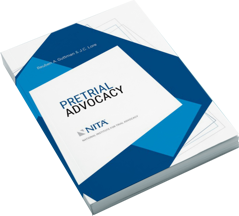
On Demand CLE: Reuben Guttman, and Professor JC Lore present CLE covering topics in their book, Pretrial Advocacy, Wolters Kluwer-NITA (2021).”
To learn More
More about the book here
More CLEs by GB Attorneys

Articles

CLE: Why Mediation Fails and How to Fix It: A Strategic, Political, and Practical Approach to Case Resolution | myLawCLE

CLE: Pharmaceutical and Medical Device Litigation: Accountability, Promotion, and Fraud Case Studies | myLawCLE

CLE: Do You Have an Employment LawCase? Reimagining Employment Law Intake and Client Communication with AI

More Articles

Copyright © 2026 · Guttman Buschner PLLC
Disclaimer