• Skip to primary navigation
  • Skip to main content
  • Skip to primary sidebar
  • Skip to footer

Guttman Buschner LLP

  • Home
  • Areas of Practice
    • High Impact Litigation
    • Whistleblower and False Claim Cases
    • Personal Injury & Wrongful Death
    • Employment Litigation and Civil Rights – Employees
    • Employment Counseling and Litigation – Employers
    • Dispute Resolution and Investigation
    • Corporate Governance
  • Successes
  • Articles
  • Attorneys & Advisors
    • Reuben A. Guttman
    • Traci L. Buschner
    • Judge Nancy Gertner (Ret.)
    • Dan Guttman
    • Dr. Caroline Poplin
    • Elizabeth H. Shofner
    • Paul J. Zwier II
    • Dr. Lisa Wollman, MD
    • Rick Mountcastle
  • CLE Seminars
  • Amicus
  • Videos
  • Contact Us
    • Twitter
    • Facebook
    • LinkedIn

Staff

September 21, 2020 By Staff

Ruth Bader Ginsburg was all I wanted to be

I was in my late 20s, attending a conference for women lawyers in the 1970s. I sat in the front row of a large auditorium for the keynote address. The speaker was Ruth Bader Ginsburg, the founder of the American Civil Liberties Union Women’s Rights Project. I was mesmerized.

She was all that I wanted to be. To devote one’s life to the fight for civil rights, to use legal skills to effect justice, better yet to make a difference — I could think of nothing greater. And I was not alone; generations of civil rights lawyers looked to emulate her.

Ginsburg’s vision of gender equality was decades ahead of her time. It went beyond just empowering women to compete for “men’s” roles. While stereotypes distorted women’s view of what was possible, they also impeded men, no less trapped in gender-based assumptions. Equality meant that both sexes should be free to assume all of society’s roles without preconceptions. My son can be a caregiver; my daughter can be an executive. When the school administrators wanted Ginsburg to come to school to discuss her son’s misconduct, she famously said, “This child has two parents.”

Her record as an advocate before the Supreme Court was outstanding; she argued six cases before the court, winning five. If she had done nothing else in her life, that alone would have been an extraordinary legacy.

While she continued to be animated by her life’s passion for equality when she joined the court, she was not the “activist” caricature some in the media have portrayed her to be. She was anxious to avoid upending precedent, determined to be respectful of the opinions of her colleagues. She believed in incremental legal change and emphasized the limited role that a court plays in a constitutional democracy.

In Ginsburg’s understanding, courts have a critical role to play in identifying new understandings of the Constitution, but they must do so by “measured motions.” They are part of a dialogue with other organs of government and with the people as well. She was critical of the reasoning in Roe v. Wade, because it had accomplished too much too soon. She was, as the New York Times’s Linda Greenhouse described at the time of her confirmation, a “judicial-restraint liberal.”

She would apply the court’s precedents but take pains to situate them in their social and historical context. A Ginsburg decision would tirelessly recount the history of gender-based classifications, the “stunningly anachronistic” generalizations about men and women, as she described them, that were embedded in the law.

When, shortly after she joined the court, she wrote the majority opinion requiring that women be admitted to the all-male Virginia Military Institute, her analysis was classic Ginsburg: a lengthy description of the school, its prestige, its role in preparing men and only men for high-status roles in government and industry. In cases challenging affirmative action programs, she would recite the data that showed the persistence of racial inequity in housing, education and employment, the lingering effects of “centuries of law-sanctioned inequality.” She prefigured today’s debate about systemic discrimination.

Ginsburg brought her own experiences to bear, insisting that legal rules be understood in “the realities of the workplace,” a reality she understood well. When a Supreme Court majority rejected Lilly Ledbetter’s pay discrimination claim because she had sued too late, Ginsburg dissented, teaching her colleagues about how pay discrimination, unlike discrimination in promotions or hiring, was hidden from view; Ledbetter sued as soon as she found out about it. Goodwin Liu, a justice on the California Supreme Court and a former Ginsburg clerk, has said that when Ginsburg was recounting Ledbetter’s story, she was also telling her own.

Her judicial influence has to be measured not simply in the decisions she authored, but also in the decisions of her colleagues and lower-court judges, I among them. It extends to areas far beyond gender and race discrimination, including cases about access to justice, disability discrimination, the right to counsel.

Ginsburg was a reluctant dissenter, concerned about the moral weight of a decision when the court did not speak in a single voice. But in recent years, her role changed with the court’s shifting membership. She dissented more and more — when the majority gutted the Voting Rights Act or enabled businesses to opt out of contraceptive coverage for employees based on a broad religion-based exemption. She dissented when the majority spoke paternalistically about women who felt compelled to end a pregnancy in the second trimester.

In 2013, years after that conference at which I first heard her speak, I gave the Ruth Bader Ginsburg address at the New York City Bar Association. The justice introduced me, with an unforgettable sense of humor and warmth. Afterward, she sent me a gift, not a fancy academic treatise, but a signed book of her late husband’s recipes, with a moving note. If I published my talk, she wanted to make certain that I included the story about Sadie, my mother. That story? Even though I had graduated Yale Law School, Sadie wanted me to take the Triborough Bridge toll taker’s test – just in case!
September 10, 2020 By Staff

Star lawyer attacks Danish giant: Patients were bribed with money and gifts

Armed with a top American lawyer, a former Novo Nordisk boss in the US makes a number of serious accusations against the Danish pharmaceutical company, which is accused of having used illegal sales methods, which must have cost American society a fortune. Novo is also accused of bribing patients.

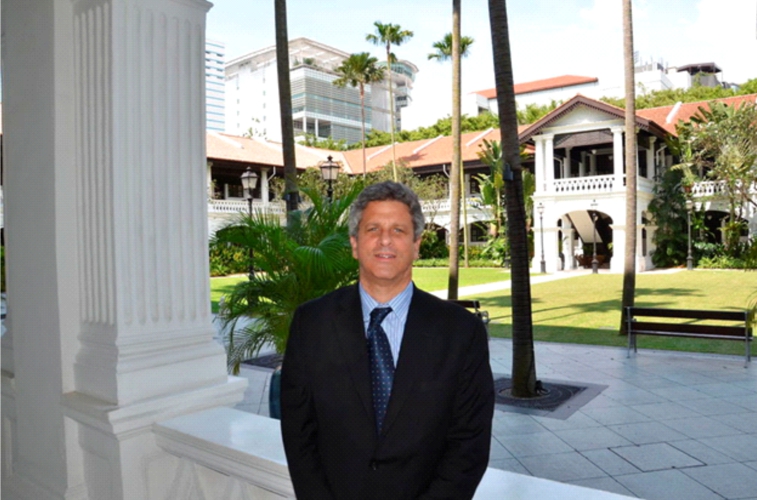
Top lawyer Reuben Guttman is called one of the world’s most prominent whistleblower lawyers and now represents a former Novo Nordisk manager in the US in a lawsuit in which the Danish pharmaceutical group is accused of, among other things, using bribes and violating ethics for profit. Photo: GBBlegal.com

August 26, 2020 By Staff

NITA Podcast: Best Practices for Remote Hearings

with Judge Amy Hanley and D.C. civil litigator Reuben Guttman to talk about how to get it right in video and telephonic hearings.

In Episode 8 of the podcast, we are joined by Kansas District Court Judge Amy Hanley and D.C. civil litigator Reuben Guttman to talk about how to get it right in video and telephonic hearings. The disruptions caused by the covid pandemic have suddenly moved the courtroom into your dining room, and our guests are sharing their best do’s and don’ts from their respective positions on and before the bench. The Honorable Amy Hanley is based in Lawrence, Kansas, and presides over a civil, domestic, and criminal docket for the Seventh Judicial District of Douglas County. In his class action and complex civil litigation practice, Reuben Guttman has become one of the most prominent whistleblower lawyers in the world. Topics6:04    Constitutional and statutory constraints9:12    Preparing your client 11:20  Judges’ expectations13:40  Putting clients at ease15:08  Courtroom transition to online 16:51  Views from the bench18:33  Creating formality23:17  Equal time 29:25  Exhibits and judge preferences31:43  Presenting exhibits33:45  Making a court record35:25  Recording the hearing36:44  Communicating with client40:25  Witness sequestration41:42  Confidentiality issues43:26  Public Zoom hearings46:00  Closing advice48:20  Technology’s impact on the law49:07  Signature “softball”Quotes“If your judge doesn’t have the protocol [for remote hearings], don’t be afraid to ask for it. A little secret that I’ll let you in on is that judges love it when counsel does that work for us. You might be better suited to draft and propose a protocol due to your familiarity with the technology or because you know the witnesses and exhibits that need to be used. And we love it when you do that work for us ahead of time and send in a draft that we can use as a starting point.” Judge Amy Hanley“It’s important to get [clients] to appreciate what it’s going to look like, what they’re going to look like, in the courtroom and to have them to appreciate that maybe the judge might actually pose a question to them directly, to rehearse some of that so they’re not surprised. If you’re sitting next to somebody, it’s a lot easier to tap them and say, ‘It’s ok, don’t worry about it. Answer the question,’ but remotely, I mean, there’s an intuitive sense of fear: ‘Oh, my God, I’m not prepared for this.’ So, the idea is that you want to make sure whether you’re putting your client on from prison or jail, or whether you’re putting your client on from a hospital room, you want to make sure that at least they understand what the possibilities are, in preparing them. I call it inoculation, inoculation against the possibilities that may give them anxiety.” Reuben Guttman

Learn more here.

August 20, 2020 By Staff

The Art of Opening Statements (Or Is It Opening Arguments?)

Getting a case down to its “gist” and to its “core,” retired federal judge Nancy Gertner said, involves picking the evidence that’s most favorable to your side. “That kind of selection is inevitably argument,” she said, as part of a webinar on openings presented Tuesday by NITA and CVN.

Learn more here (Subscription Required).

August 19, 2020 By Staff

Free NITA Webcast: The Opening Gambit: Learn Opening Statements through Actual Courtroom Video

Presented by: Reuben Guttman, Judge Gertner, Judge Noble, and Phillip Freidin – Cases can be won or lost at the opening statement. No opening is the same, and strategies differ depending on the case and the jurisdiction. In this first-ever collaborative webcast between NITA and Courtroom View Network (CVN), retired federal judge Nancy Gertner, Missouri circuit court judge Michael Noble, and Miami trial lawyer Philip Freidin will join NITA faculty Reuben Guttman in this 90-minute webcast, for a spirited analysis of what makes a commanding opening statement.

The panel will show CVN video clips of actual opening statements from a variety of civil jury trials, then examine not only the lawyers’ performances but also the demonstratives that can play such a critical role in visually conveying the details in these extremely complex, high-stakes cases to jurors.

Among the clips under analysis are a first-in-the-nation bellwether products liability trial involving metal hip implants that ended in an $8.3 million verdict, a landmark opening statement from trial attorney Mark Lanier that helped secure a $47.5 million Vioxx verdict, and the opening statements from a trial in Texas involving a large explosion at a BP refinery.

Register Here.

Also: Free NITA Webcast August 18: Building Rapport with a Jury: Lessons in Picking the Jury That’s Right for Your Case (Aug 13, 2020)

Presented by: Richard Schoenberger – It can be easily argued that jury selection is the most important part of the trial. After all, they are the folks who will be making the decision that affects your client’s future. Get the wrong mix, and you may have yourselves a problem. And getting people to be brutally honest and speak openly in front of a room full of strangers on topics they never before considered can be, to put it mildly, a tad difficult. How do you make jurors feel comfortable enough to talk and really open up? How do you bounce from juror to juror? How do you reveal and “de-select” those jurors who are wrong for your case? How do you convert your questions to establish the all-important challenges for cause? Let’s talk about it!

Register Here


  • « Go to Previous Page
  • Page 1
  • Interim pages omitted …
  • Page 13
  • Page 14
  • Page 15
  • Page 16
  • Page 17
  • Interim pages omitted …
  • Page 38
  • Go to Next Page »

Primary Sidebar

Information

  • Where to Start
  • Whistleblower Information
  • Federal & State False Claims Acts
  • Protecting Whistleblowers
  • CLE for Attorneys

Law Flash

What to DOGE about Fraud, Waste, and Abuse?

Unless you’ve been living under a rock, you’ve seen the headlines. “Department of Defense pays $32,000 to replace 25 coffee cups.” “Boeing overcharges Air Force by 8,000% for soap dispensers.” While … [Read More...] about What to DOGE about Fraud, Waste, and Abuse?

Footer

Guttman Buschner PLLC

Washington DC Office
Embassy Row District
1509 22nd Street, NW
Washington, D.C. 20037
Phone: 202-800-3001

Home
Areas of Practice
Successes
Articles
Attorneys & Advisors
CLE Seminars
Amicus
Videos
Contact Us
On Demand CLE: Reuben Guttman, and Professor JC Lore present CLE covering topics in their book, Pretrial Advocacy, Wolters Kluwer-NITA (2021).”
To learn More
More about the book here
More CLEs by GB Attorneys

Articles

CLE: Why Mediation Fails and How to Fix It: A Strategic, Political, and Practical Approach to Case Resolution | myLawCLE

CLE: Pharmaceutical and Medical Device Litigation: Accountability, Promotion, and Fraud Case Studies | myLawCLE

CLE: Do You Have an Employment LawCase? Reimagining Employment Law Intake and Client Communication with AI

More Articles

Copyright © 2026 · Guttman Buschner PLLC
Disclaimer